11 min read
GUIDE / Event Production
How to Plan Interpreting and Translation for a Live Event
To plan interpreting and translation for a live event, identify who needs to understand whom, the languages and directions required, the programme segments involved and any written material that needs translation. Agree the interpreting mode, language professionals, technical delivery, preparation, responsibilities and checks. Interpreting handles live spoken or signed contributions; translation handles written text. A receiver, headset or platform feature alone does not provide the complete language service.
On this page
Agree who needs to understand whom, what must be translated and how each service will reach its users.
Start with the communication requirement
"We need translation" is a starting point. Does the audience need to follow a speech in another language? Will a panellist answer in a different language? Are translated slides, signs or handouts needed? Those requests involve different work.
Agree who needs to understand whom before choosing the equipment.
A useful production brief identifies the people, languages, programme and intended outputs. Then the organiser, language-service provider and production team can establish a workable scope.
Interpreting and translation are different services
Translation concerns written text. Interpreting conveys live contributions between languages, including spoken and signed languages. You may also see the live service described as interpretation. The American Translators Association distinguishes spoken interpreting from written translation; AIIC also explicitly includes signed languages in interpreting. (ATA; AIIC FAQ)
| Requirement | Service to clarify | Production consequence |
|---|---|---|
| Guests need to follow a live speech in another language. | Interpreting for the relevant language direction. | Agree the delivery mode and how listeners receive it. |
| A panellist and moderator use different languages. | Interpreting for the directions needed by their exchange. | Prepare both contributions and the relevant listening paths. |
| Slides, handouts or signs must appear in another language. | Translation, with content and layout review. | Identify the source version, translated version, approving person and delivery deadline. |
| Participants need captions or sign-language interpreting. | The specific access service required by those participants. | Agree its own providers, destinations and checks; do not infer it from another service. |
A translated presentation does not interpret an unscripted answer. An interpreter working during the event does not automatically supply translated slide files afterwards. Agree both services where both are needed.
Define the languages and their directions
Write the requirement as a direction: English into Spanish, for example. If someone will respond in Spanish and English-speaking participants need to understand the response, Spanish into English is another requirement to agree.
The list of languages alone does not establish the directions covered. AIIC's selection guidance asks which languages interpreting is needed from and into.
Identify the relevant sessions, people and participation methods. Include audience questions, panel discussion, films and remote contributions where they are part of the programme. The original contribution is sometimes called the floor language; it can change when the next person speaks.
Ask about the particular languages and varieties needed. Where sign-language interpreting is requested, establish the required sign language and participation arrangement with the relevant people and provider rather than assuming a universal sign language.
Choose a mode that fits the programme
In simultaneous interpreting, interpretation is delivered while the speaker continues, with the processing delay inherent in following the contribution. In consecutive interpreting, the speaker pauses and the interpreter delivers the contribution in turn. (ATA)
That distinction affects the programme. Consecutive exchanges need time for the interpreted contribution. Simultaneous delivery still needs preparation and agreed listening arrangements. Do not assume one mode fits every session or apply a fixed time multiplier to every event.
Have the language-service provider advise on suitable personnel, language coverage, working periods and breaks. AIIC identifies language directions, mode, meeting length and parallel sessions as factors in team requirements. This guide does not prescribe a universal number of interpreters or a changeover interval. (AIIC selection guidance; AIIC FAQ)
Put the agreed delivery into the run of show, including introductions, questions, films, handovers and any planned pauses. A change of mode or language coverage may require a programme and supplier-scope decision.
Plan the language service and its technical delivery together
Depending on the agreed service, delivery may involve interpreter working positions or booths, interpreter equipment, microphones, audio distribution, participant receivers and headphones, or a remote platform and participant devices. The provider and relevant technical specialists should establish what is suitable. AIIC describes specialist equipment and direct programme sound among the requirements for conference simultaneous interpreting. (AIIC FAQ)
Separate what the interpreter receives from what the listener receives. Review:
- the microphones, playback and remote contributions the interpreter must hear;
- the speaker, slide or other visual information needed for the assignment;
- the interpreted output each group of participants needs to receive;
- how participants find and select the intended language;
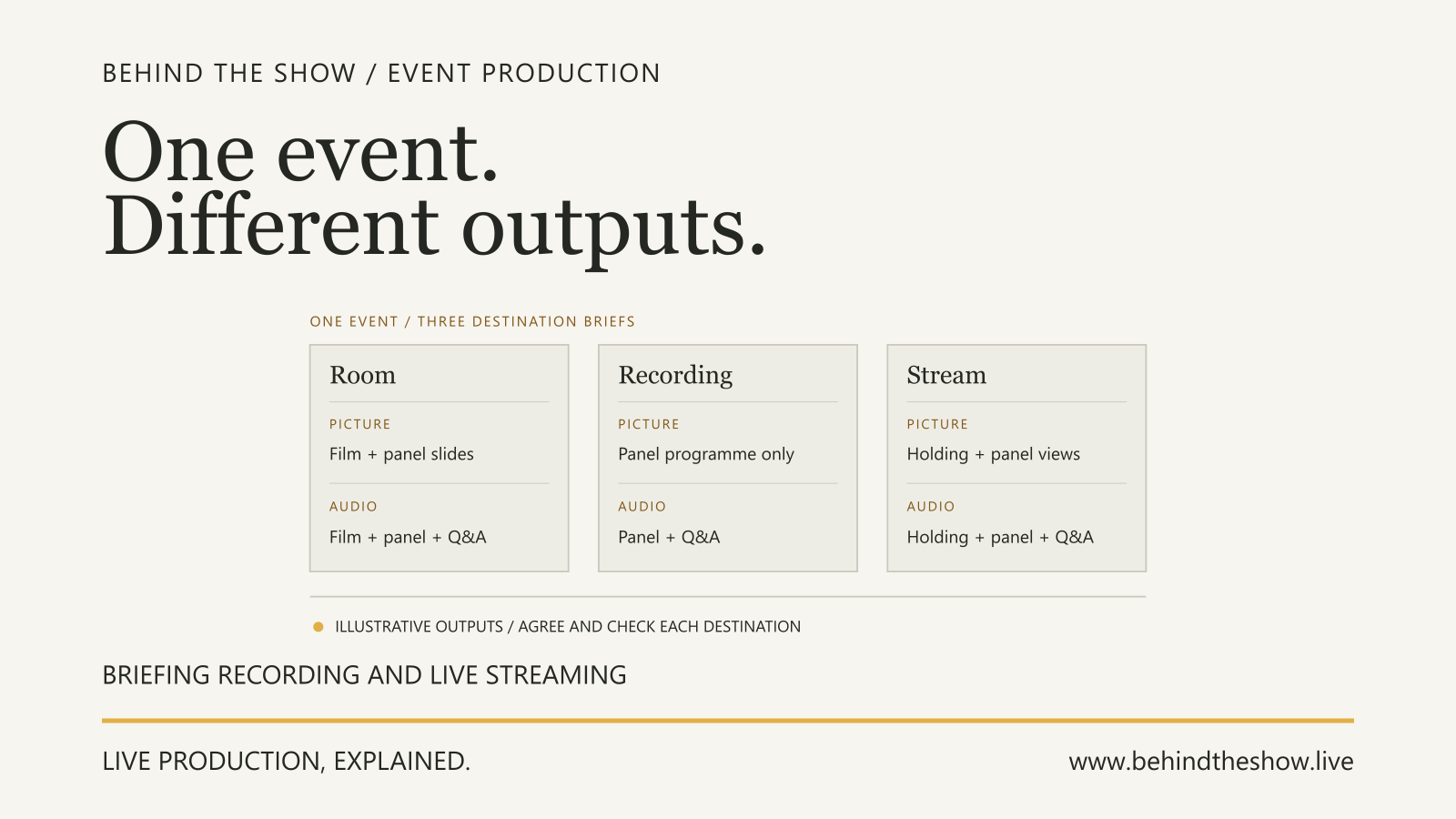
- any separately commissioned recording, streaming or remote participation outputs;
- who supplies, prepares, operates and supports each part.
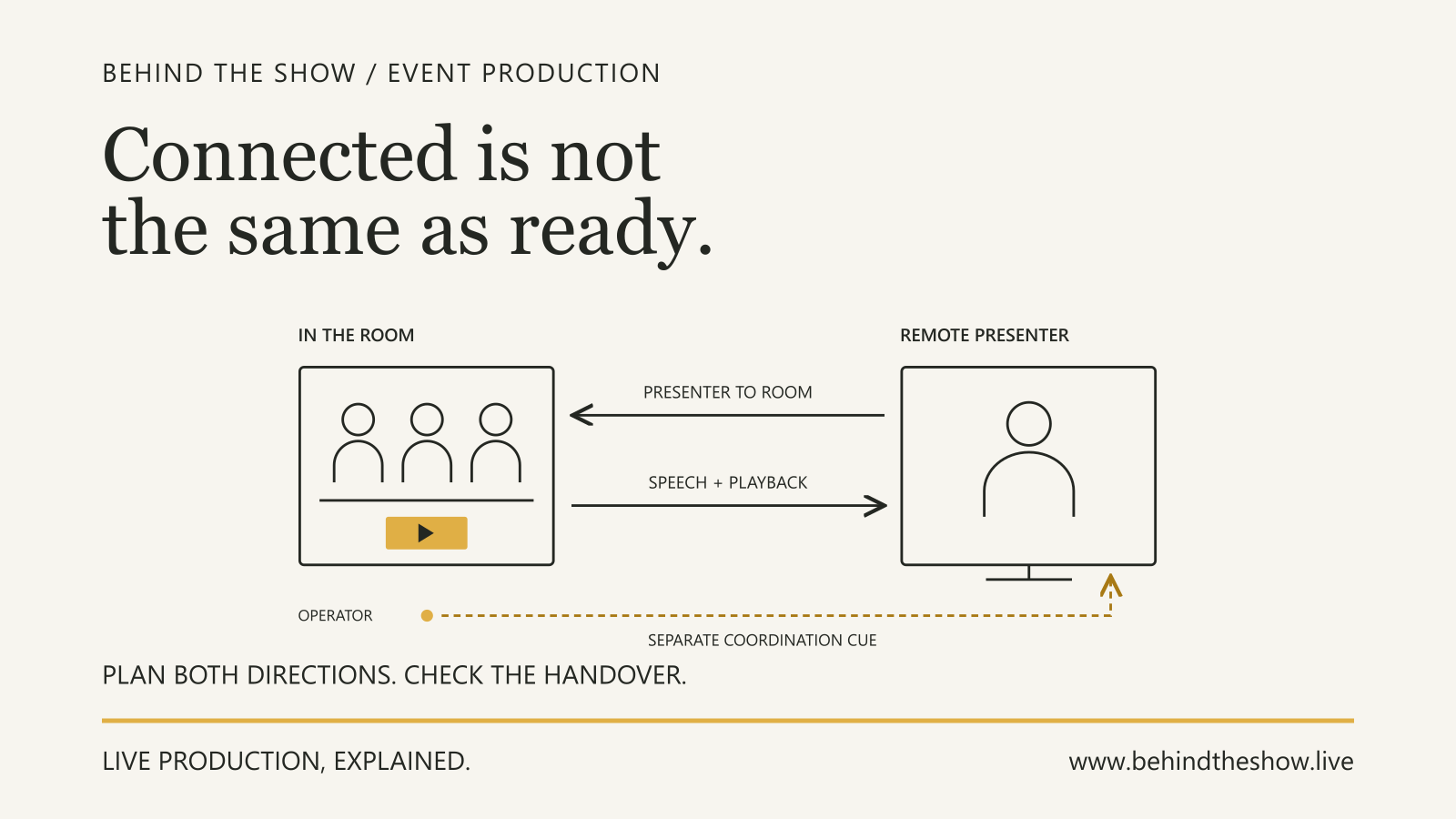
The requirement is the complete communication path. Hearing interpretation through one receiver does not establish that every microphone reaches the interpreting team or that a remote participant receives the intended language.
Agree distribution, collection and support for any participant devices, including the number required and how people obtain help. If the proposal depends on personal devices or connectivity, establish those assumptions and try the intended participant experience. Do not assume a platform account or an interpretation button includes people, preparation or delivery support.
Leave audio routing, system compatibility, radio-frequency or infrared arrangements, booth suitability and network configuration to the relevant specialists. This Article does not provide a wiring design, a booth specification or an equipment-compliance certificate.
Prepare written materials and language professionals
Give the interpreting team the current programme, speaker information, presentation material and relevant terminology in advance through the agreed route. Include names, acronyms, prepared scripts and film content where relevant. AIIC explains the role of preparatory material; W3C also recommends providing material to interpreters and captioners before the event. (AIIC FAQ; W3C)
For translated materials, agree the source version, intended audience, language, approving person, format and deadline. Identify who reviews the language and who checks the final layout. A correct translation can still be placed in the wrong slide file or an outdated programme.
The content owner approves what the material is intended to say. A suitably competent language professional reviews the translation. The production team checks the delivered file and destination within its scope. File receipt alone does not complete those separate decisions. See content handover.
Ask about confidentiality and any agreed use of material or interpreted output when commissioning the service. Identify who obtains necessary permissions and resolves unclear terms. Do not assume that live provision automatically includes recording or later publication.
Keep captions and other access requirements explicit
Captions provide text access to speech and relevant non-speech audio. Translated subtitles, spoken-language interpreting and sign-language interpreting address different requirements. Ask participants and the relevant providers what is needed; do not substitute one service for another by assumption. (W3C)
Where an interpreter must be seen, review visibility, lighting and any required camera or screen view as part of the participation arrangement. W3C addresses interpreter visibility and planning access services with participants and providers. It does not make a single successful audio check proof of complete accessibility. (W3C)
If an automated language or captioning service is proposed, specify which output it supplies, the intended languages and use, who evaluates suitability, how problems are reported and what happens when the output is unavailable or unsuitable. Treat it as a proposal requiring review, not an unapproved replacement for the commissioned service or a participant's agreed access provision.
Worked example: a bilingual forum with questions
A fictional product forum has an English-language keynote, a Spanish-speaking remote panellist and questions from the room. Participants need English and Spanish listening options for the agreed discussion. The organiser also requests Spanish presentation materials and an English-language recording.
The initial supplier brief says: "Translation, two languages, receivers included."
What the first review establishes
| Requirement | Evidence at the first review | Decision and responsible follow-through |
|---|---|---|
| Spanish-speaking listeners can follow the English keynote. | A sample English speech reaches the interpreting team and the Spanish output is heard on a participant receiver. | Record this limited result. The audio lead and interpreting lead still need to check the actual programme sources and intended delivery arrangement. |
| English-speaking participants can follow the Spanish panellist. | The proposal describes English into Spanish only. Spanish into English coverage and the remote participant's listening arrangement are unconfirmed. | The organiser and language-service lead clarify the required directions and obtain an agreed scope. Relevant technical contacts prepare the proposed paths after those requirements are explicit. |
| The interpreting team can follow questions from the room. | The audience-question microphone was not included in the source feed used for the first test. | The audio lead coordinates the affected technical preparation, then the interpreting team checks receipt during a representative question-and-answer exchange. An audible keynote did not check this source. |
| Spanish slides match the current approved presentation. | The English deck is revision 3; the Spanish deck was prepared from revision 2, which lacks a changed product statement. | The content owner identifies the current source; the translation provider reviews the affected wording and the content lead accepts the intended version. Video checks the accepted file and its destination. Matching revision numbers alone would not prove agreement. |
| The commissioned recording delivers an English-language version of the discussion. | Only the live Spanish listener output has been checked. No agreed recording language plan or reviewed playback evidence is available. | The recording lead and organiser define the deliverable and acceptance route, with the language-service lead involved where relevant. Keep this output unconfirmed until its agreed checks have been completed. |
Agree the service, then try the exchange
The language-service lead proposes coverage for the required directions and programme. The organiser's authorised contact accepts the scope and any consequential programme change. The technical leads coordinate delivery, including the remote participant's required receive path. Those decisions are related, but a technical routing proposal does not itself commission additional interpreting work.
For this example, the moderator identifies when questions begin, the room team provides the agreed question microphone, and the technical team maintains the relevant source and destination paths. The language-service lead coordinates the interpreting team. These are assigned functions for this example, not compulsory job titles or a universal staffing structure.
The second attempt includes the keynote, a Spanish contribution from the actual remote participant, the moderator's response and a question from the room. The relevant language professionals review the language delivery within their assignment. Technical leads report the sources and destinations checked; representative users confirm that they can obtain and use the intended listening option. The content team and video team check the accepted Spanish deck at its intended destination.
The audio and recording team then make and play back a representative test against the agreed English-language recording requirement. A live receiver result is not used as recording acceptance. The organiser receives the recorded outcomes and any remaining limitations through the agreed handover.
These results support the attempted arrangement. They do not establish linguistic accuracy solely because audio was present, prove every participant device works, or approve a later change to the programme or files.
Keep a late change visible
A speaker replaces a slide and adds an unprepared film. Identify the new content, who needs it and which language-service and technical checks are affected. The interpreting lead advises what preparation is needed; the translation provider reviews any changed written material. Keep unconfirmed requirements visible rather than treating an email attachment as acceptance.
If the agreed service cannot be confirmed in the available time, the authorised organiser decides the programme response with the relevant leads. Do not silently drop a language direction, an access provision or a recording deliverable.
ILLUSTRATIVE SCENARIO
Hand over the agreed language plan
Record the covered sessions and language directions, interpreting mode, responsible providers, accepted material versions, participant instructions and intended outputs. Include the results of relevant checks and open actions with their owners and next decisions.
The language-service lead reports the scope and language-service readiness within their assignment. Technical leads report delivery checks. Content owners identify approved materials. The agreed programme authority decides programme changes. One coordinator distributing the plan does not replace those responsibilities.
If a language path or a provider becomes unavailable, use the agreed escalation and recovery arrangements. An untested change to mode, platform or provider should remain a proposal until its consequences are reviewed. The Backup and Recovery guide explains that wider decision process.
Related questions
What is the difference between interpreting and translation at an event?
Interpreting conveys live spoken or signed contributions between languages. Translation concerns written text, such as slides, handouts or signs. An event may require both, with their scope, providers and outputs agreed separately.
What is the difference between simultaneous and consecutive interpreting?
In simultaneous interpreting, interpretation is delivered while the speaker continues. In consecutive interpreting, the speaker and interpreter take turns. Agree the mode with the provider and allow for its effect on the programme rather than assuming a fixed schedule or staffing formula.
Why do language directions matter when planning an event?
English into Spanish does not by itself establish Spanish into English coverage. Identify who contributes and who needs to understand each contribution, including questions and remote participation, then agree the required directions and delivery.
Does hiring interpretation equipment include the interpreting service?
Not automatically. Equipment, language professionals, preparation, operation and participant support are separate scope items to confirm. A receiver or platform feature alone does not establish the complete language service.
What information should interpreters receive before a live event?
Provide the current programme, required language directions, participants, presentations, terminology and relevant scripts or film content through the agreed route. Confirm delivery arrangements and update the relevant people when the source material changes.
Can captions replace interpreting at a live event?
Do not assume so. Captions, translated text, spoken-language interpreting and sign-language interpreting address different requirements. Agree the needed provision with participants and the relevant providers, then check its actual delivery.
Does a working interpretation receiver prove the event recording is ready?
No. A receiver check concerns the listening path tested. Agree the recording's languages, pictures, sound and acceptance checks separately, then verify a representative recording rather than inferring it from the live service.
Who should approve translated event materials?
Identify the content owner and the person responsible for competent language review. Confirm the accepted translation against the current source, then have the relevant production team check the delivered file, layout and destination within its scope. Receipt alone does not complete those decisions.
Sources & references
- Translator vs. InterpreterAmerican Translators Association / primary document
- Selecting interpretersAIIC Asia-Pacific / primary document
- FAQ about interpretingAIIC Asia-Pacific / primary document
- Making Events Accessible: Checklist for meetings, conferences, training, and presentations that are remote/virtual, in-person, or hybridWorld Wide Web Consortium, Web Accessibility Initiative / primary document
Continue learning