7 min read
GUIDE / Production Management
How to Evaluate an Event and Run a Post-Event Debrief
Evaluate an event by comparing what happened with the objectives agreed before it, using evidence such as timing records, observations and attendee feedback. In the debrief, agree what to keep, what to change and what still needs checking. Give each follow-up an owner, a deadline and a way to tell whether the change helped.
On this page
Turn event evidence into decisions, owners and a check for next time.
Start with the result you wanted
Open the event plan and find the objectives that were agreed. For each one, ask what would count as success and which record can show it. “Start the keynote on time” can be checked against the planned start and the cue that marks the keynote’s start. “Make arrival easy” needs more definition, such as a wait-time target and a way to hear from attendees who used different arrival routes.
If there was no target, describe the result you can support and use it to propose a baseline for next time. Keep a target set after the event separate from the original objectives. Where budget was an objective, compare the approved budget with actual and outstanding costs on the same basis. Mark the result provisional while costs are still being reconciled.
Southwark Council’s event evaluation guidance suggests comparing intended outcomes with what happened and gathering evidence from people involved. The measures and decision record below are one way to put that into practice.
Collect evidence before asking for explanations
Take a short account from the people who worked the event while the sequence is fresh. Bring the records to the decision meeting once they are available. A small team can combine the two conversations if it already has reliable evidence and the people who can make the decisions.
Check what each record measures. Use the badge scan as the end of the wait only if it marks completion of check-in. Pair that timestamp with the time the same attendee joined the queue. A cue log can show that a session began on time even if some attendees missed the start. Feedback can explain how arrival felt to the people who replied. Record the response count and the group it came from before drawing a wider conclusion.
Put the observation, possible explanation and next check in separate fields. If two teams disagree, preserve the difference and identify the evidence that could resolve it. A useful change may be worth testing even when the cause is uncertain.
Bring the people who can decide and deliver
Ask someone to lead the conversation and someone to record the decisions. Invite the people who hold the evidence or will own the resulting work. For arrival, that might include registration, front of house and the venue. Bring in the programme or production lead if the finding affects session timing or show operations. Agree who can approve changes to the plan, supplier scope or budget for this event. If the person who can approve a change is absent, record the proposal as pending and name who will take it to them for a decision.
A routine event debrief can capture lessons alongside a separate incident review. Keep any required reporting, investigation or specialist follow-up with the responsible people and procedures. In its guidance on managing an event, the UK Health and Safety Executive recommends debriefing after events, particularly after significant incidents or emergencies and when venue design or procedures may change. Include relevant agencies where appropriate.
Worked example: The keynote started on time, and some people entered after it began
A conference checks in 240 attendees. Its event plan calls for a 09:30 keynote start and at least 90% of sampled arrivals to wait five minutes or less between joining the queue and completing check-in. The registration team times 50 arrivals across three planned observation windows using the same start and end points.
| Evidence | Finding | What it supports |
|---|---|---|
| Timed arrival sample | 37 of 50 waits were five minutes or less (74%). Nine of the 13 longer waits were sampled between 09:10 and 09:25. | The sample missed the target. Review that arrival window. The sample alone cannot estimate the wait for every attendee. |
| Programme and front-of-house logs | The cue that marks the keynote’s start was logged at 09:30. Front of house counted 18 people entering the room during the first five minutes. | The programme met its start target. Some people entered after it began. The logs do not establish where those people had been delayed. |
| Attendee survey | 72 people responded. Twelve mentioned difficulty finding the badge correction point. | Wayfinding is worth investigating. The 12 comments describe respondents’ experience and cannot be generalised to all 240 attendees. |
The registration lead recalls several name corrections being handled at the main desk during the busiest period. The team has no count of those cases by time window. It treats shared processing as a possible contributor and keeps arrival bunching and unclear signs in the review. It also keeps the opening cue sequence, which supported the on-time start.
| Debrief decision | Owner and deadline | Who decides or accepts | Evidence at follow-up |
|---|---|---|---|
| Draft a separate route for badge queries and clearer arrival signs. | Registration lead drafts it within five working days. | Venue and front-of-house leads confirm the proposed layout is workable within the agreed arrival arrangements. The event manager approves the revised plan after those checks. | A marked-up layout, assigned staff and a walkthrough from the attendee entrance to the room. |
| Check whether the proposed layout needs another paid staff member. | Registration lead checks coverage before staffing is booked. | The named budget approver decides any extra spend after reviewing the revised scope and cost. | A confirmed roster and, if required, the approved scope and cost. If the layout depends on the extra post, the event manager keeps that version pending until the budget approver authorises the spend and the registration lead confirms coverage. |
| Test the revised arrival plan at the next comparable conference. | Front-of-house lead sets up measurements before that event. | Event manager reviews whether to retain or revise the arrangement at the next debrief. | Repeat the same wait definition and observation windows relative to keynote start. Record each window’s sample size, badge-query volumes and early room entries. Note material differences in venue, attendance or staffing before comparing. |
The first follow-up accepts the layout and staffing plan when its prerequisites are met. The later review checks whether arrival improved. Until the next event supplies that evidence, record the outcome as awaiting evaluation.
ILLUSTRATIVE SCENARIO
Put the decision in the document people will use
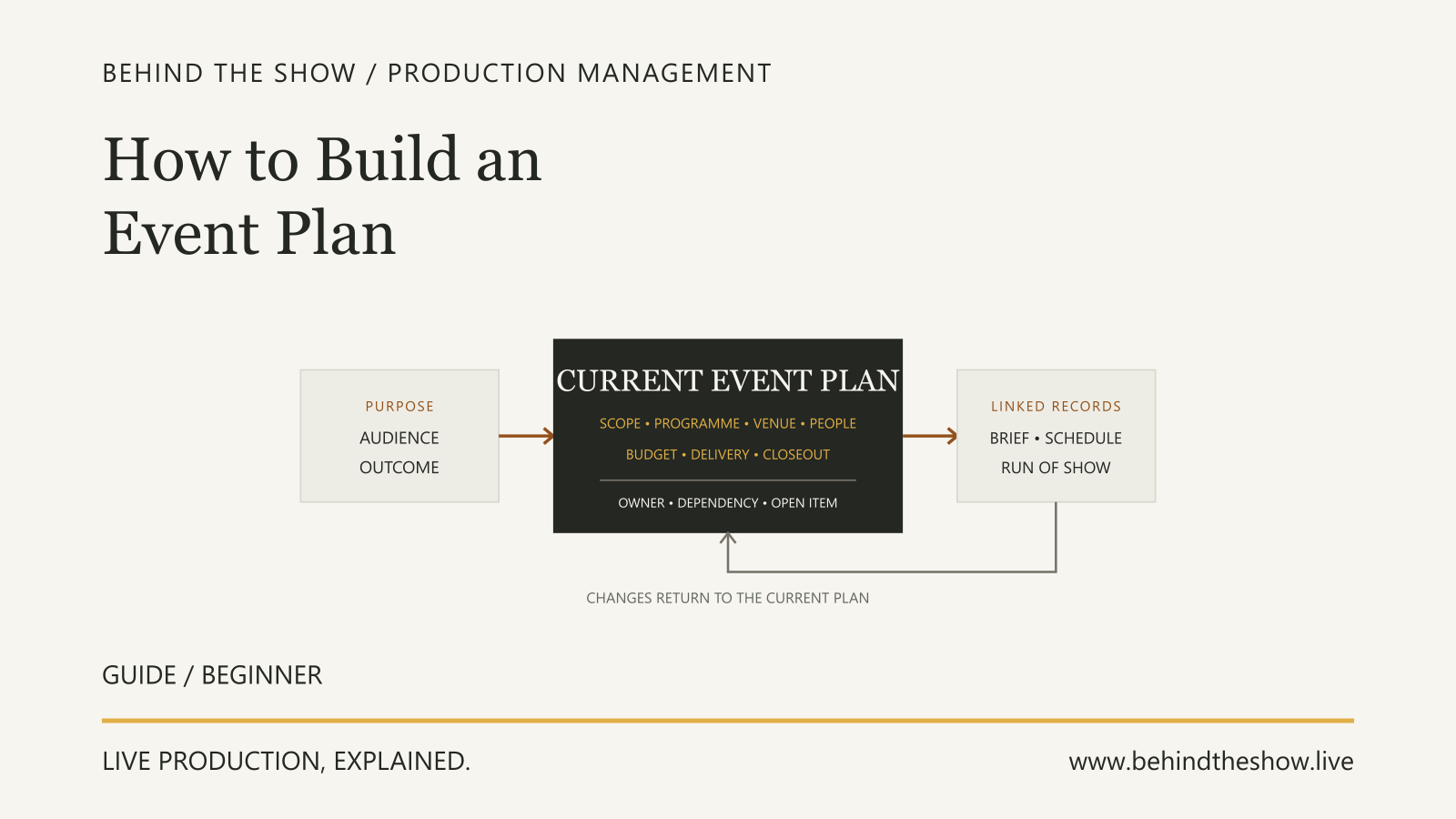
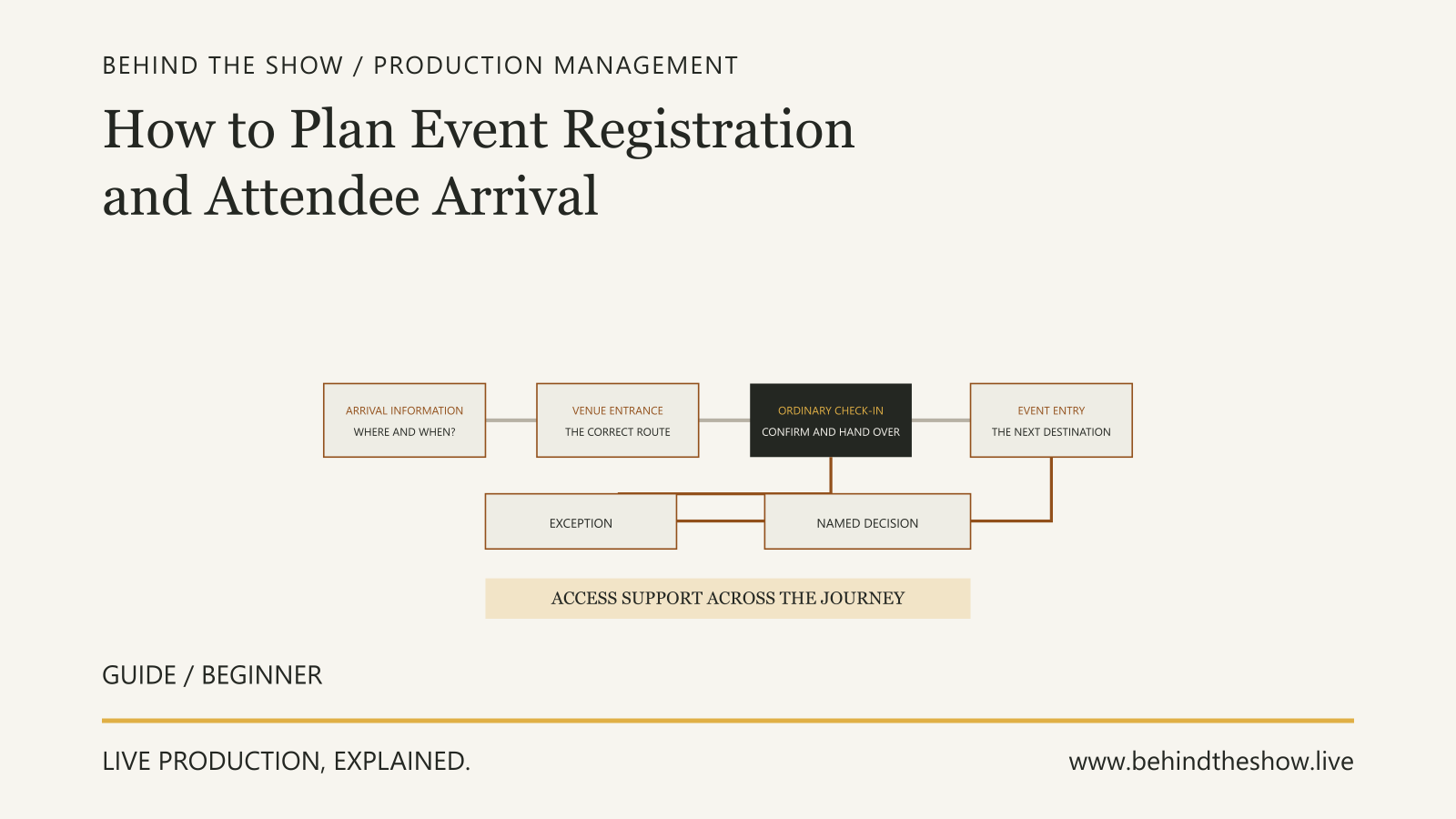
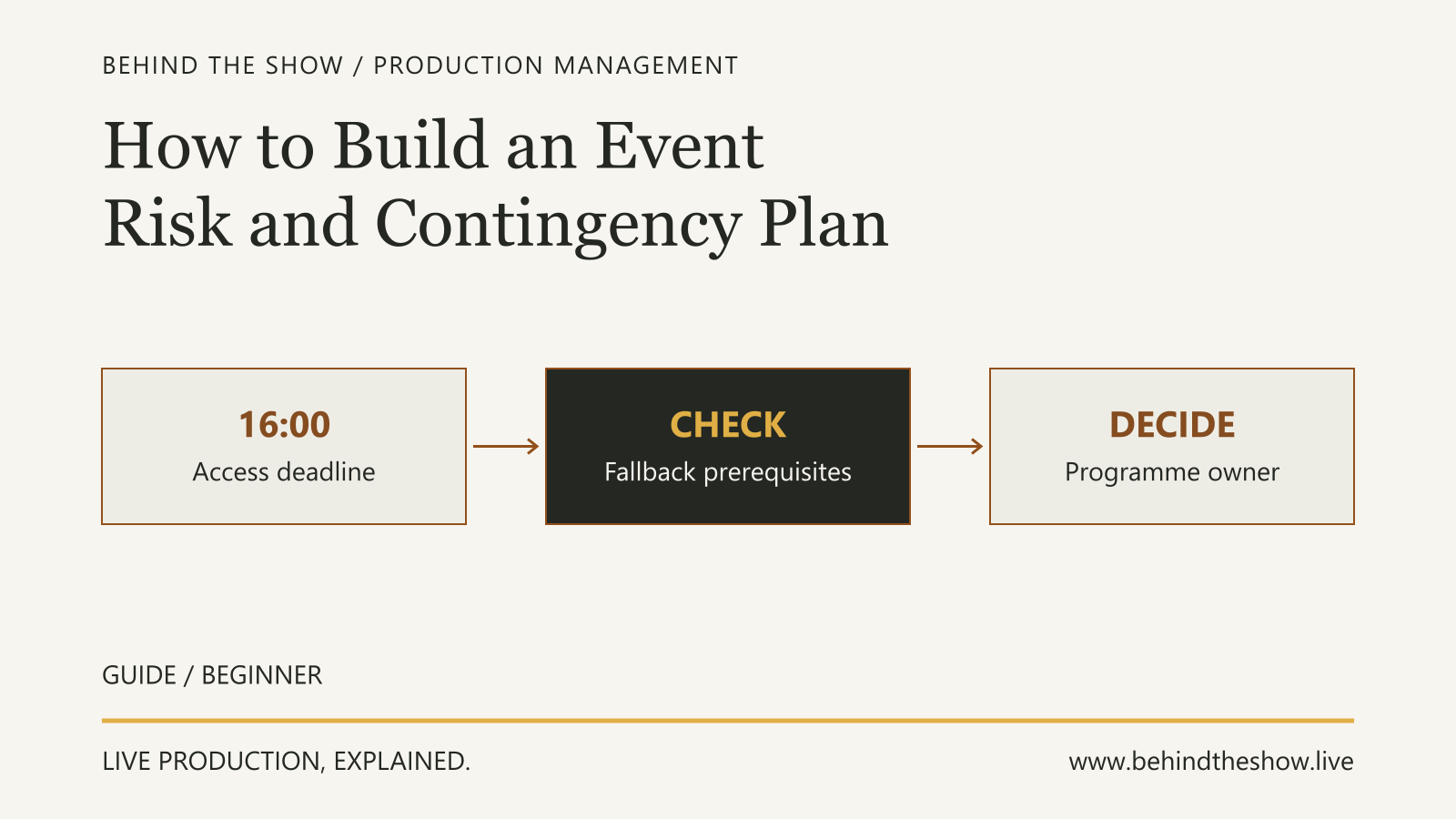
Record the original objective, evidence and limits, decision, owner, approval needed, deadline and next check. Update the registration and attendee arrival plan where the change affects routing, signs or staffing. If a new assumption could disrupt the next event, bring it into the event risk and contingency plan with a trigger and decision owner.
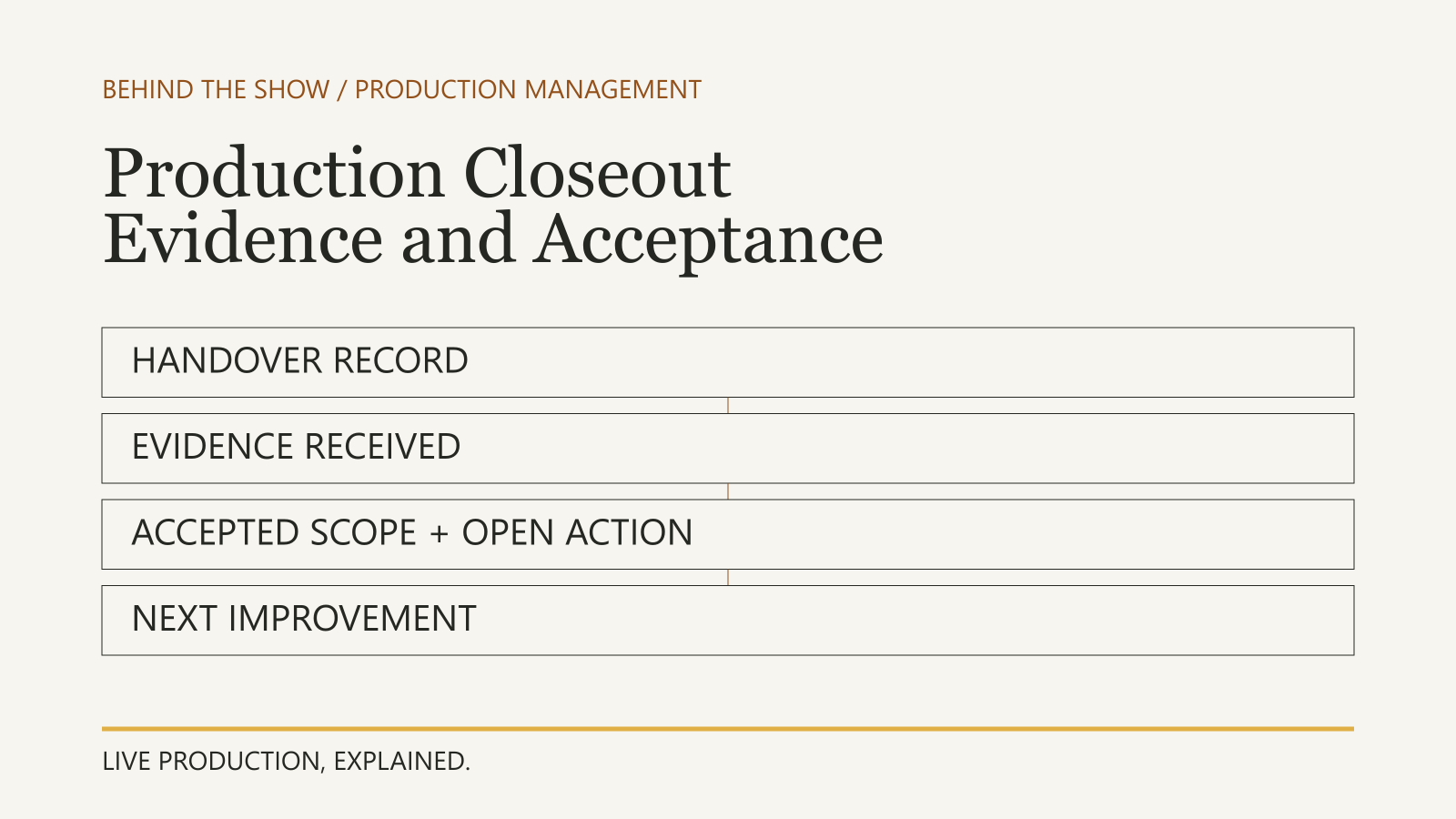
Use production closeout for open commitments from the event just delivered. An outstanding supplier item still needs evidence and acceptance for that event. A change to next time’s brief has its own owner and a separate check for whether it helped.
Related questions
How do you evaluate an event?
Compare actual outcomes with the objectives agreed before the event. Use relevant records and feedback, explain gaps in the evidence and decide what the findings support.
What should you cover in a post-event debrief?
Review intended outcomes, what happened, what helped and what needs to change. Agree the next action, owner, deadline and evidence that will show progress.
Who should attend an event debrief?
Invite the people who can explain the evidence, make the relevant decisions or carry out the actions. Include venue, supplier and specialist representatives where their work or decisions are involved.
How soon should you debrief after an event?
Capture immediate observations while they are fresh. Review decisions when the people and records needed are available. Follow applicable incident procedures and deadlines separately.
How do you use attendee feedback to evaluate an event?
Record who was asked, who answered and what feedback can explain. Compare it with timing or operational records and keep the conclusion within what the sample supports.
How do you follow up after a post-event debrief?
Record the decision in the working plan with an owner, deadline and approval route. Confirm the change was made, then check whether the result improved at the next relevant event or trial.
Sources & references
- Review your eventSouthwark Council / primary document
- Managing an eventUK Health and Safety Executive / primary document
Continue learning