9 min read
GUIDE / Production Management
How to Compare Event Venues Before Booking
Compare event venues against the same current event requirement before booking. Check audience capacity and experience, accessibility, programme fit, dates and working access, production and supplier conditions, facilities, transport, staffing, restrictions, permissions, cost and contract terms. Record what each venue includes, excludes, assumes and has not yet confirmed. Compare the total operational consequence, not room hire alone, and make the booking only through the person authorised to accept the venue, budget and unresolved conditions.
On this page
A practical method for comparing venue suitability, operating conditions, total cost and unresolved booking conditions against one current event requirement.
In Brief
The best event venue is not automatically the largest, cheapest or most impressive option. It is the venue that can support the event requirement within accepted cost, access, operating and audience conditions.
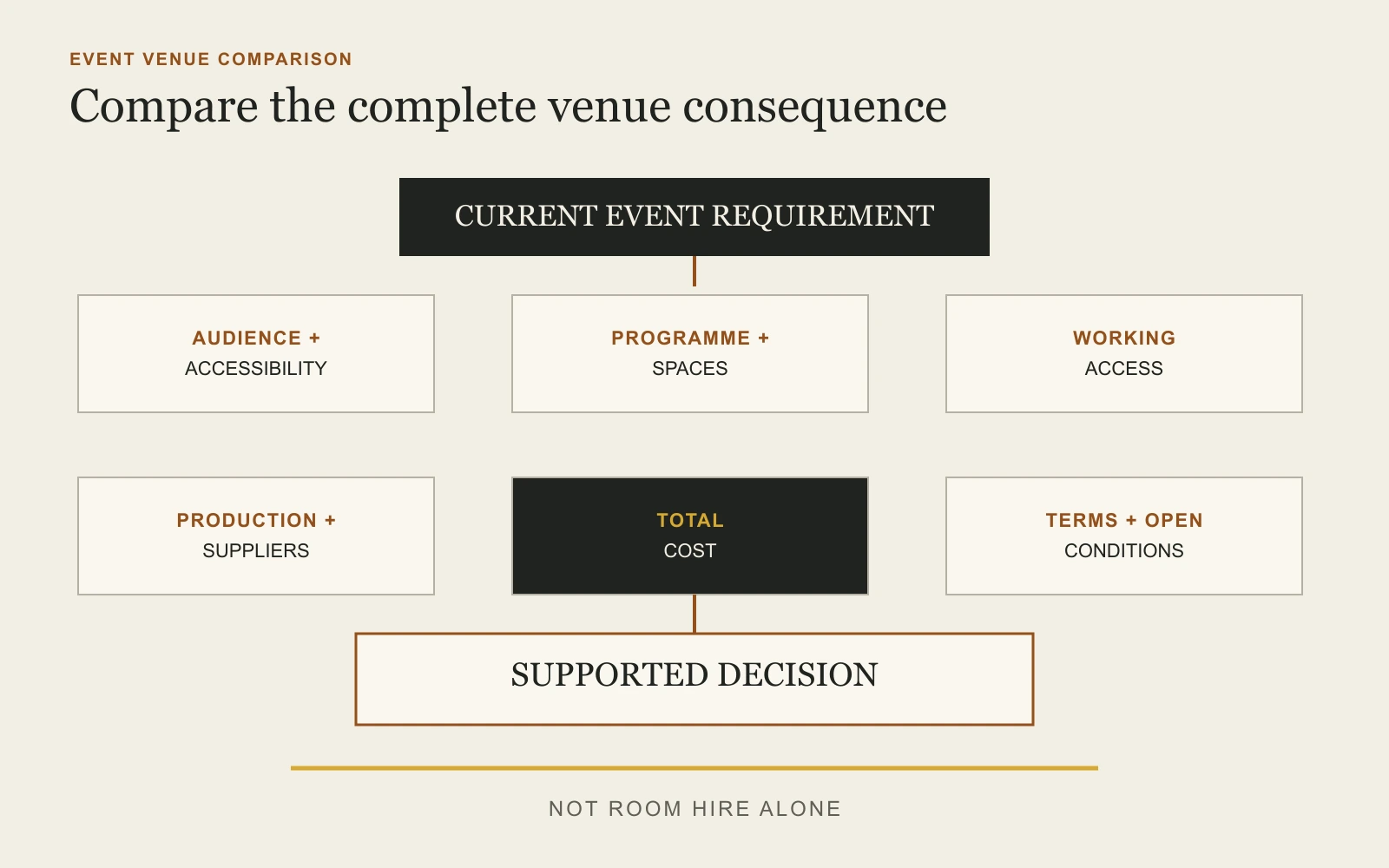
Use the same comparison basis for every candidate. A venue that appears less expensive can become the higher-cost option when it requires additional rooms, extended access, temporary infrastructure, transport, staffing or production changes.
Start With the Event Requirement
Before requesting venue proposals, define what the event needs to achieve.
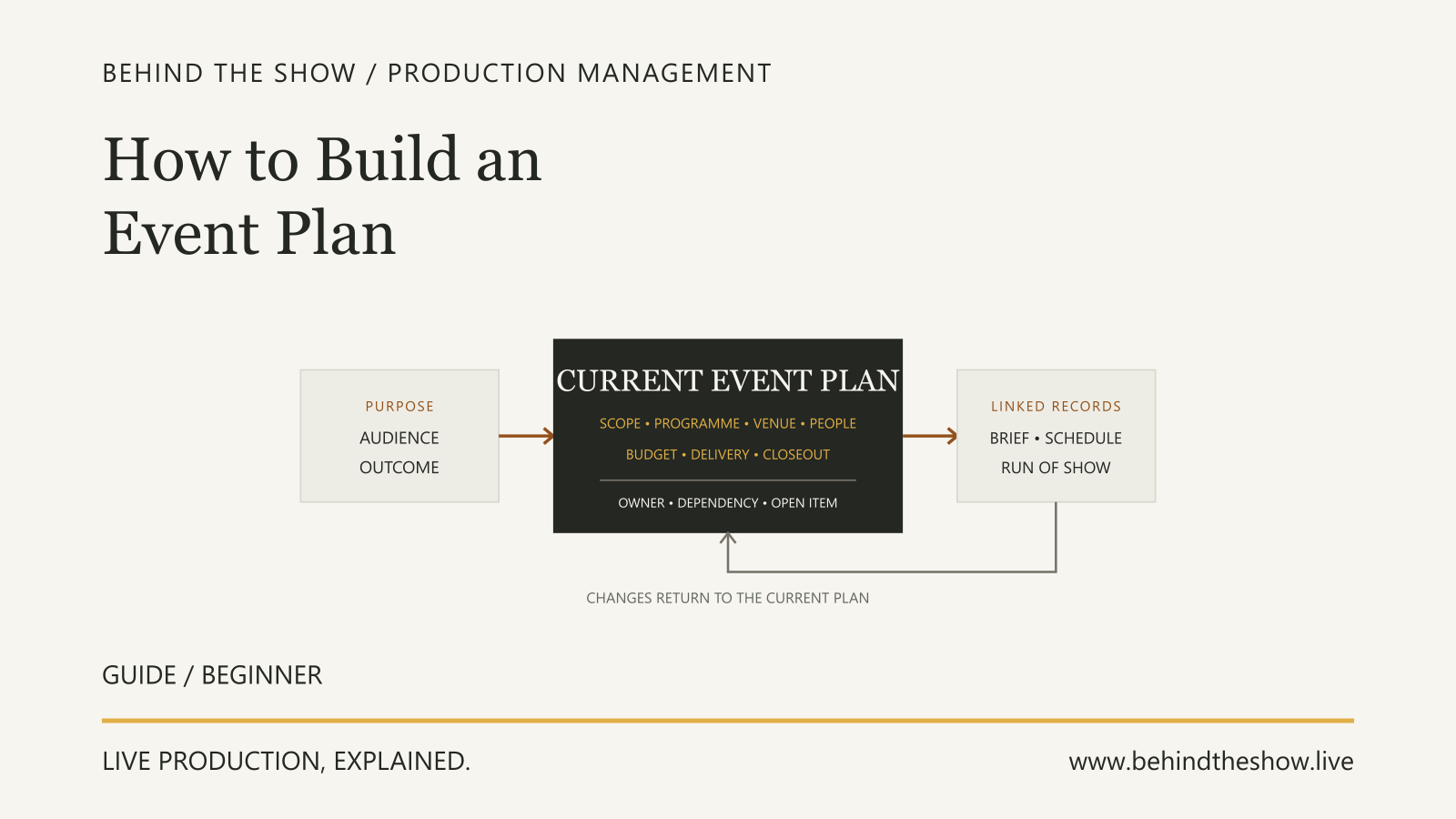
Use the Event Plan guide to record:
- purpose and intended audience result;
- audience profile and expected attendance;
- programme format and duration;
- event date and alternative dates;
- room, stage and supporting-space requirements;
- accessibility requirements;
- catering, registration and attendee-flow needs;
- production and content requirements;
- build, rehearsal, event and removal periods;
- budget position and approval authority;
- known risks, dependencies and unresolved questions.
Without a common requirement, each venue can appear suitable for a different version of the event.
Compare Capacity With the Actual Layout
A published capacity is not proof that the event layout will fit.
Ask what arrangement the capacity assumes. Theatre seating, classroom tables, cabaret rounds, exhibition stands, camera positions, control areas, accessible seating, aisles, stages and catering service can change the usable audience number.
Capacity and crowd decisions belong with the venue, organiser and relevant competent people under the applicable rules. The Event Manager should record the confirmed basis and avoid inventing a safe operating number.
Examine the Audience Journey
Consider how attendees reach, enter, use and leave the venue.
Review:
- public transport and parking;
- vehicle drop-off and collection;
- entrances, registration and queue space;
- movement between rooms;
- sightlines and audibility;
- toilets, seating, water and rest areas;
- catering and networking flow;
- wayfinding and event information;
- exit and post-event transport conditions.
Walk the route as an attendee would. A strong plenary room does not solve an inaccessible entrance, congested registration point or impractical transfer between programme spaces.
Treat Accessibility as a Venue Requirement
Accessibility should be considered before booking, not added after the venue is committed.
Review step-free access, continuous routes, accessible facilities, seating choices, transport and drop-off, signage, lighting, hearing or communication support, quiet-space possibilities and the requirements of attendees, staff, presenters and performers.
The NSW Government's accessible-events guidance recommends considering accessibility from the earliest planning stages and checking the complete path of travel and facilities. The exact legal and technical requirements depend on location and event. Obtain appropriate local advice rather than treating this article as compliance confirmation.
Check Dates and Working Access
Confirm more than the audience-facing event time.
The venue may be available for the programme but unavailable for the required build, rehearsals, supplier deliveries, cleaning or load-out. Record:
- room handover time;
- loading and supplier access;
- setup and build window;
- system checks and rehearsal;
- attendee access and doors time;
- programme period;
- strike and load-out deadline;
- overnight access or storage;
- noise, labour or operating-hour restrictions;
- other events using shared spaces.
Use the Production Schedule explainer to understand how access windows affect the wider working timeline.
Review Programme and Supporting Spaces
Map the programme into actual spaces.
A plenary session may also require speaker holding, green rooms, registration, production control, interpretation, catering, storage, crew welfare, press, exhibition or private meeting space. Confirm whether those rooms are included, adjacent, available for the required periods and suitable for their intended use.
Do not assume a room name defines its function. A boardroom may not support remote participation, recording or confidential discussion merely because it contains a table and display.
Understand Production Conditions Before Comparing Cost
Ask how the venue affects production delivery.
Relevant information can include:
- loading access and movement routes;
- lifts, doorways and floor conditions;
- installed sound, lighting, video and staging;
- power and data provision;
- rigging or suspension restrictions;
- control positions and cable routes;
- acoustic, noise and curfew conditions;
- exclusive or preferred suppliers;
- approval procedures and required documents;
- venue labour, supervision or technical charges;
- storage, security and equipment restrictions.
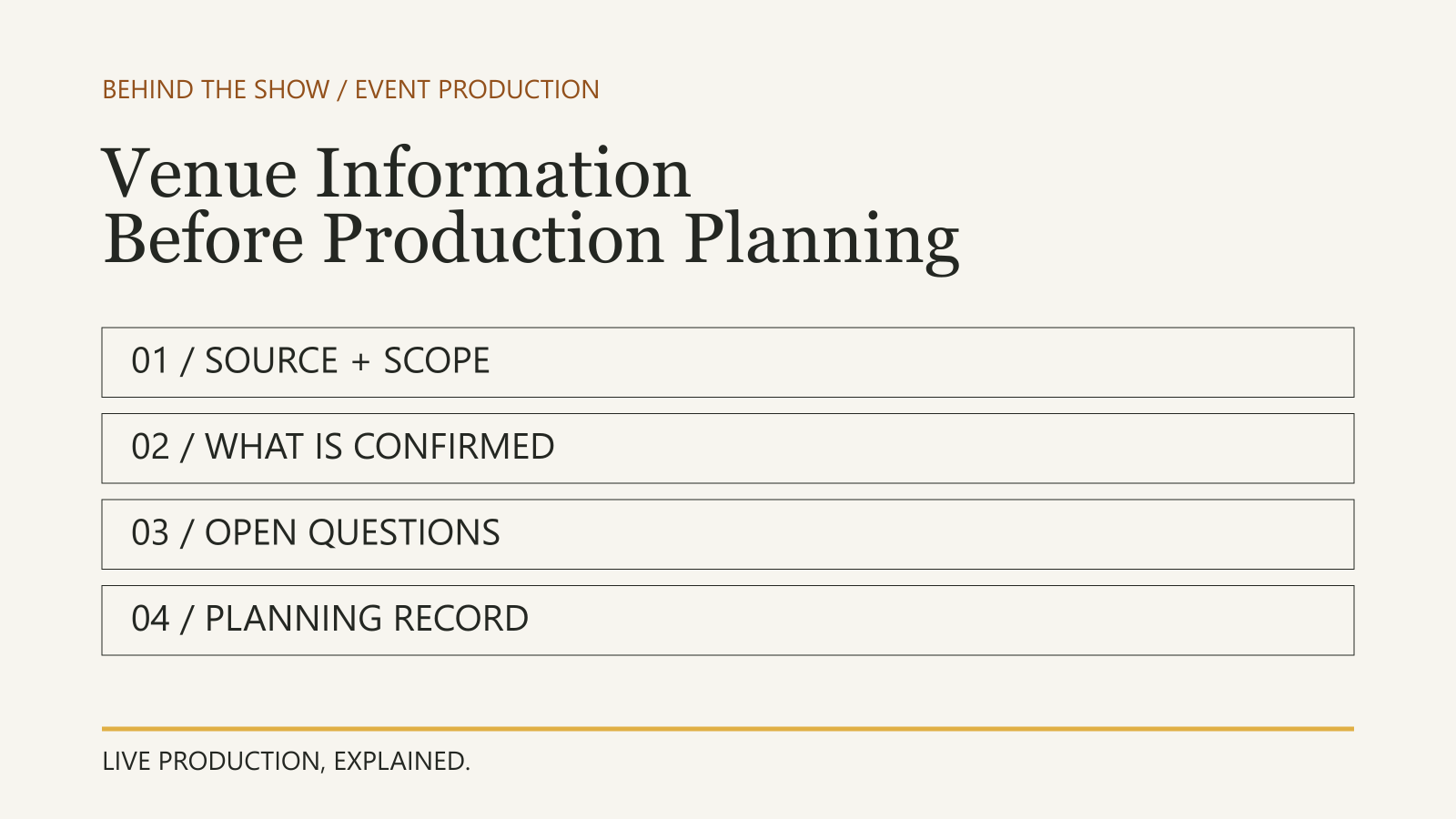
The venue-information guide explains what production teams should verify after a candidate venue enters detailed review. Do not accept installed equipment as suitable merely because it exists.
Compare Included Services and Required Suppliers
Venue proposals may package services differently.
One fee may include furniture, cleaning, security, basic technical support and standard access. Another may charge separately or require approved suppliers. Record each commitment and exclusion before comparing totals.
Check catering rules, staffing requirements, internet provision, cleaning, waste, security, first aid arrangements, furniture, branding permissions, insurance requirements and any venue-appointed service.
Compare the Total Operational Cost
Room hire is one budget line, not the complete financial consequence.
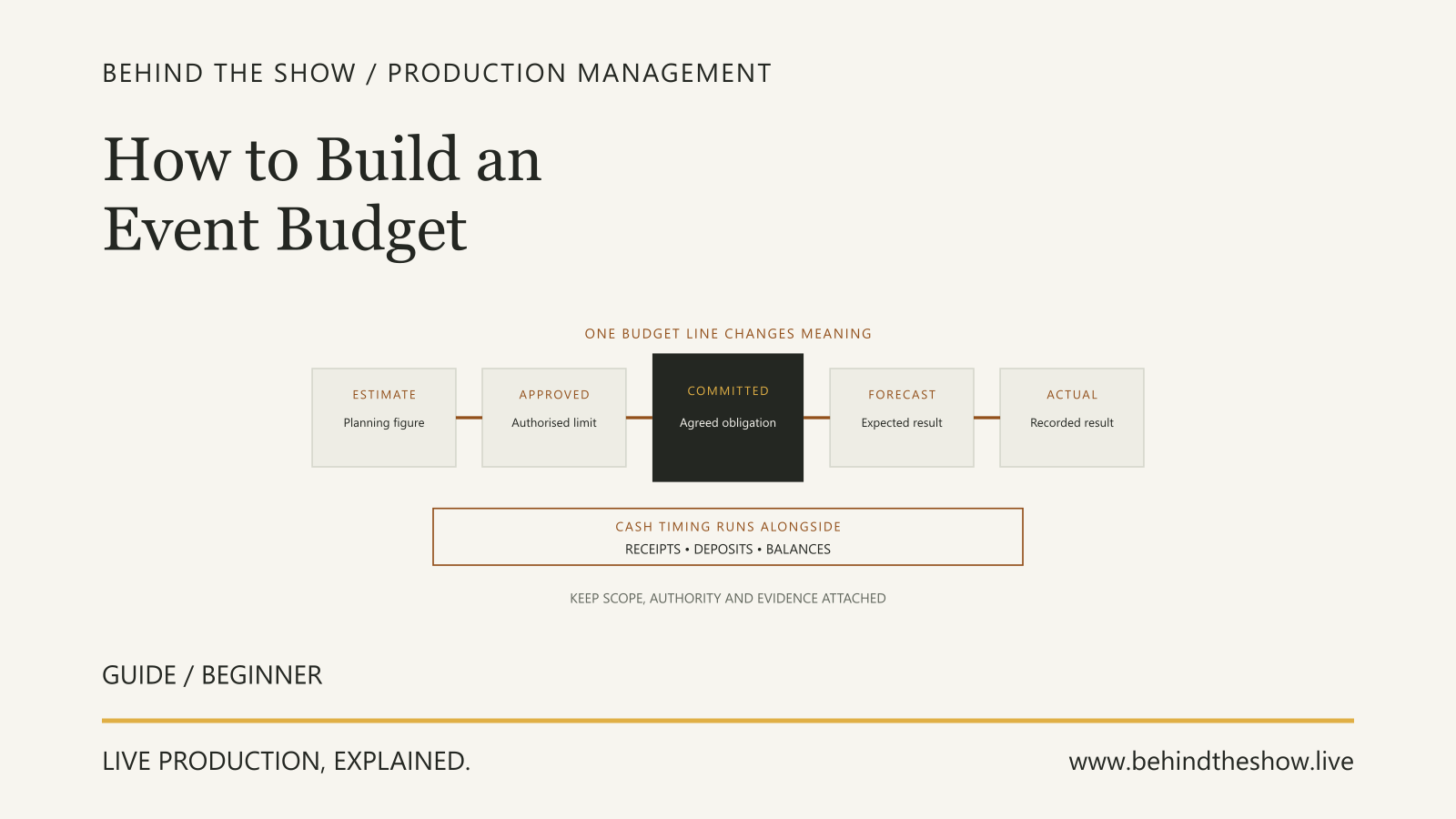
Connect the venue comparison to the Event Budget guide. Consider:
- hire and service charges;
- required deposits and payment timing;
- minimum catering or attendance commitments;
- venue staffing and overtime;
- production changes or mandatory suppliers;
- furniture and temporary infrastructure;
- transport, parking and accommodation effects;
- extended access or additional days;
- cleaning, security and waste;
- cancellation or date-change exposure;
- taxes, fees and currency where relevant.
Keep conditional figures visible. A requested discount is not an approved saving, and a provisional date is not secured availability.
Record Restrictions and Permissions
Ask what the venue or site allows and what requires separate approval.
Restrictions can affect audience numbers, alcohol, food, branding, noise, special effects, temporary structures, vehicles, filming, photography, ticketing, external suppliers or operating hours. Public spaces may involve landowner permission, licences or authority requirements.
The venue should explain its rules and existing approvals. The organiser remains responsible for identifying which event-specific permissions, insurance or professional advice are required. Do not infer legal permission from a sales proposal.
Compare Contract and Change Conditions
Before acceptance, route the proposed agreement through the organisation's authorised commercial or legal process where required.
Record:
- exact spaces and dates;
- access and handover periods;
- included services and equipment;
- pricing, taxes and payment schedule;
- deposit and balance conditions;
- minimum commitments;
- cancellation and postponement terms;
- responsibility for damage, cleaning and reinstatement;
- insurance and documentation requirements;
- supplier restrictions;
- change procedure;
- what remains subject to confirmation.
This article does not interpret contracts or provide legal advice.
Use a Comparable Venue Record
Create one row for each requirement and one column for each venue. Record the source and status of every material answer.
Useful statuses include:
- confirmed in proposal;
- confirmed in writing after clarification;
- subject to site visit or technical review;
- subject to authority or specialist approval;
- provisional;
- excluded;
- unknown.
A blank cell should remain an open question. Do not convert silence into a commitment.
Worked Example: Comparing Three Conference Venues
A professional association is planning a one-day conference for 280 attendees. The programme requires a plenary room, two afternoon breakouts, a sponsor area, recording of the keynote, step-free attendee routes and a rehearsal on the previous evening.
The approved venue allowance is 28,000 currency units. Three venues respond.
First review
Venue C has the lowest headline hire, but it has not confirmed the required audience layout, cannot provide the rehearsal period and has unresolved accessibility and recording effects. It is not treated as the lowest comparable option.
Venue B supports the layout and access requirements, but the extra breakout room and rehearsal access move the current venue forecast above the approved allowance.
Venue A remains within the allowance after its technical-labour estimate and confirms the required rooms, rehearsal and step-free route. Its recording position still requires a site review.
Decision
The Event Manager records Venue A as the preferred option, subject to production review of the recording position, written confirmation of loading access and the authorised contract review. The budget owner accepts the current forecast but does not authorise booking until those conditions are closed or explicitly accepted.
The decision record explains why Venue A is preferred. It does not claim that Venue A is universally better or technically approved for every detail.
ILLUSTRATIVE SCENARIO
Visit the Shortlist Before Final Commitment
Written information may not reveal movement conflicts, sightline limitations, acoustic conditions, loading constraints or shared-space effects.
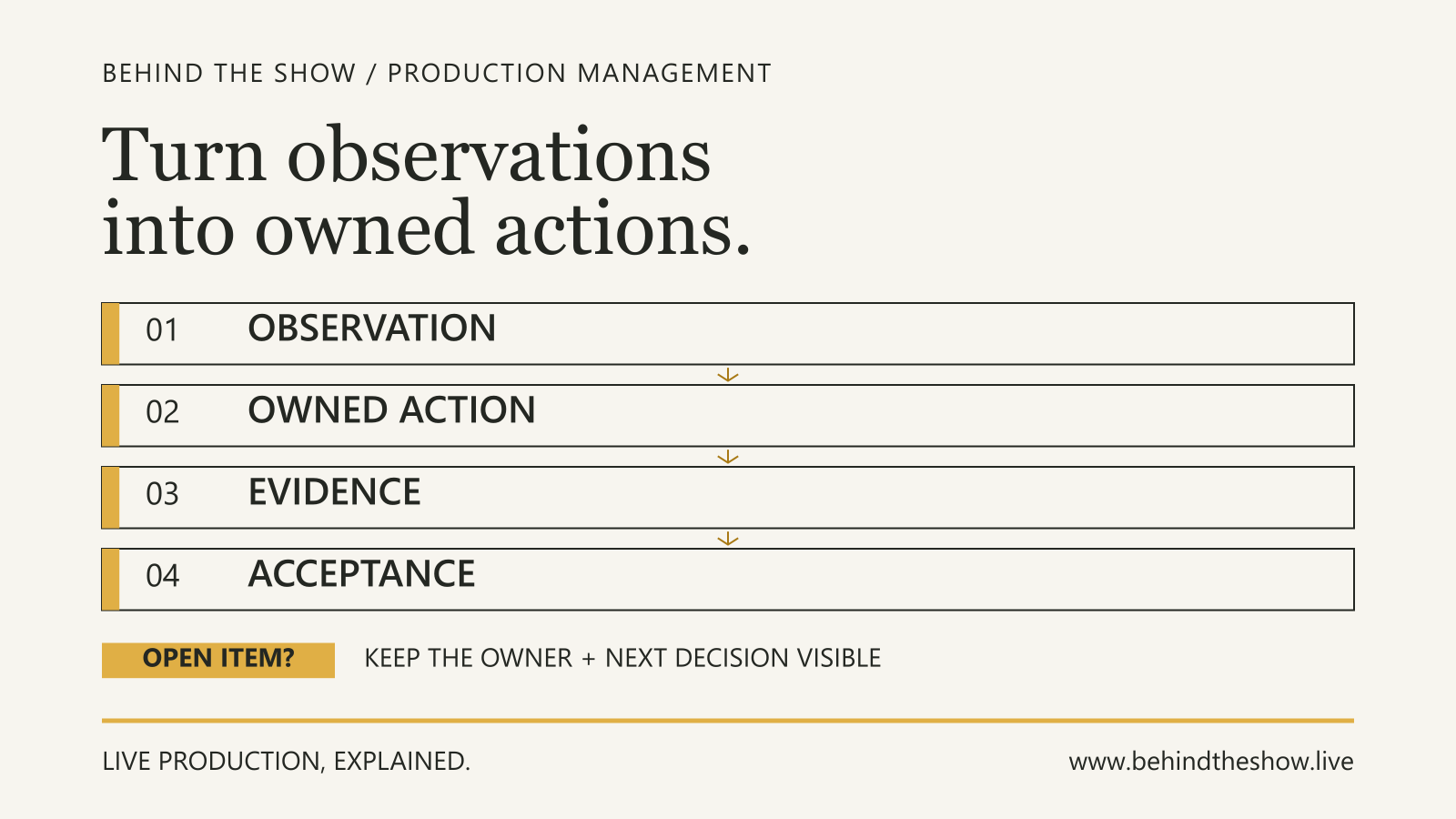
Use a site visit for shortlisted venues where the event requires it. Record observations, photographs where permitted, questions, owners and due dates. A site visit is evidence gathering, not automatic approval.
The Site Walk guide explains how to turn observations into owned actions.
Make the Decision and Preserve Its Conditions
The final decision should state:
- the selected venue and event requirement;
- the comparison version used;
- accepted cost and payment conditions;
- confirmed inclusions and exclusions;
- unresolved conditions and owners;
- required approvals or specialist checks;
- who may sign or commit the organisation;
- when the decision must be reviewed.
Keep the comparison with the current event plan and budget. If attendance, programme, dates or production requirements change, review whether the selected venue remains suitable.
What Makes a Venue Comparison Useful?
A useful venue comparison:
- starts with one current event requirement;
- tests usable layout rather than headline capacity;
- includes accessibility and audience journey;
- checks build, rehearsal, event and removal access;
- records programme and supporting-space fit;
- identifies production and supplier conditions;
- compares total operational consequence;
- separates confirmed information from assumptions;
- preserves contract, authority and specialist boundaries;
- carries unresolved conditions into the booking decision.
The comparison is complete enough to support a decision when authorised people can see what each option enables, what it costs, what remains uncertain and which conditions must survive into the agreement and event plan.
Related questions
How do you compare event venues?
Compare each venue against the same event requirement, including usable capacity, accessibility, programme spaces, dates and working access, production conditions, facilities, transport, included services, restrictions, total cost, contract terms and unresolved conditions.
What should you check before booking an event venue?
Check that the venue can support the intended audience, layout, programme, accessibility, working periods, suppliers, production, facilities and budget. Confirm inclusions, exclusions, restrictions, permissions, payment terms and who can authorise the booking.
Is venue capacity enough to decide whether a venue is suitable?
No. Capacity must relate to the actual layout and operating conditions. Staging, tables, aisles, accessible seating, cameras, control areas, catering and other requirements can change the usable audience number.
Should accessibility be checked before booking a venue?
Yes. Consider the complete attendee, staff, presenter and performer journey before commitment. Verify routes, facilities and required support under the applicable local requirements rather than assuming adjustments can be added later.
Is the venue with the lowest hire fee the cheapest option?
Not necessarily. Compare the total operational consequence, including additional rooms, access periods, venue labour, mandatory suppliers, production changes, catering conditions, transport, infrastructure, fees and unresolved requirements.
When should you visit a venue before booking?
Visit shortlisted venues when written information cannot adequately confirm layout, access, production, accessibility, movement or operating conditions. Record observations and open actions; a visit does not itself approve the venue.
Who can approve an event venue booking?
The organisation should define who may accept the venue, budget, contract and unresolved conditions. Event Managers can coordinate the comparison without automatically holding authority to sign, approve specialist matters or commit the organisation.
What should a venue comparison record show?
Show the current event requirement, each venue's confirmed commitments, exclusions, assumptions, costs, unresolved conditions, evidence sources, approval needs and the reason for the final decision.
Sources & references
- Accessibility when planning an eventNSW Government / primary document
- Safety and security for your eventNSW Government / primary document
- General event organising advice and good practiceSt Albans City and District Council / primary document
Continue learning