4 min read
GUIDE / Event Production
How to Prepare for Your First Live Event Crew Shift
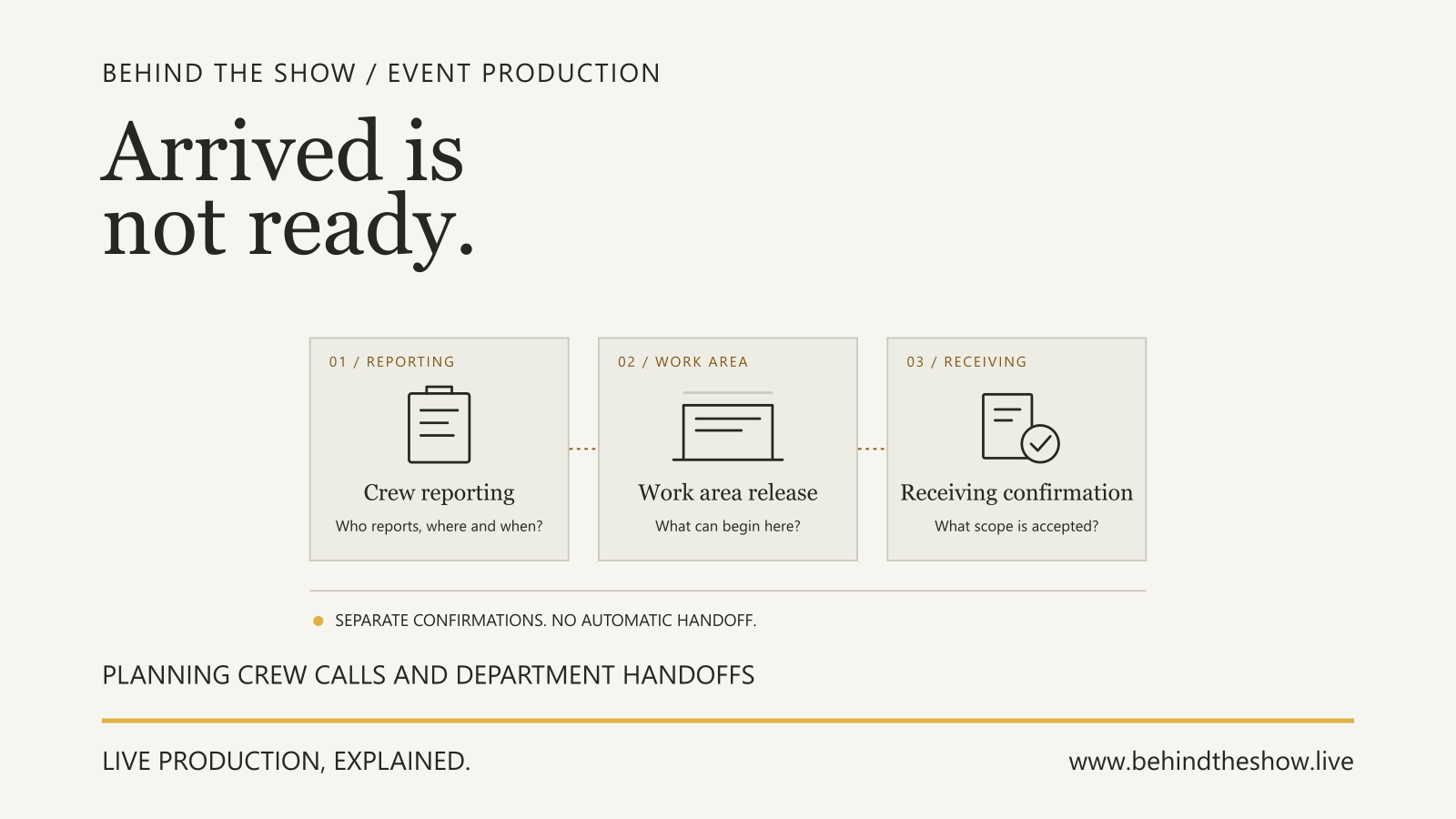
Before your first live event crew shift, confirm your call time, reporting point, supervisor and assigned work. Ask what induction, clothing or equipment your booking requires. Onsite, check how to receive assignments, where you can work and who can resolve conflicting instructions. When you finish or hand over, tell the responsible person what you did, what remains open and where they can find it.
On this page
Read your call, check who directs the work and give the next person an update they can use.
Read your call as a set of instructions
A crew message that says “08:00, ballroom setup” gives you a time and a task category. It leaves out the details you need to get to the right person. The ballroom entrance for delegates may be different from the crew check-in point. Ask whether 08:00 is the check-in time or the time you are expected at the work area.
| Confirm before travel | Ask the booking contact |
|---|---|
| Arrival | Which entrance and check-in point should I use? Is there a pass or ID requirement? |
| Reporting | Who is my lead and how do I reach them if I cannot find the crew? |
| Work | Which department am I joining? What have I been booked to do, and who gives me assignments? |
| Preparation | When is the induction? What should I bring and what will be supplied? |
| Finish | What is the planned finish or release point, and who tells me if the call changes? |
Use the event's actual instructions for clothing, protective equipment and access. Ask your lead to explain tasks and boundaries during the induction. Refer specialist work to the assigned team. UK HSE event guidance discusses site induction, task briefings and supervision proportionate to the work and its risks. Use the arrangements that apply at your event and venue. HSE, Managing an event
Confirm what the person receiving your work needs
Repeat back a new assignment in terms the lead can verify. “Six labelled packs to the backstage desk, and tell you when the desk receives them” gives the lead a chance to correct the quantity, destination or reporting step before you start.
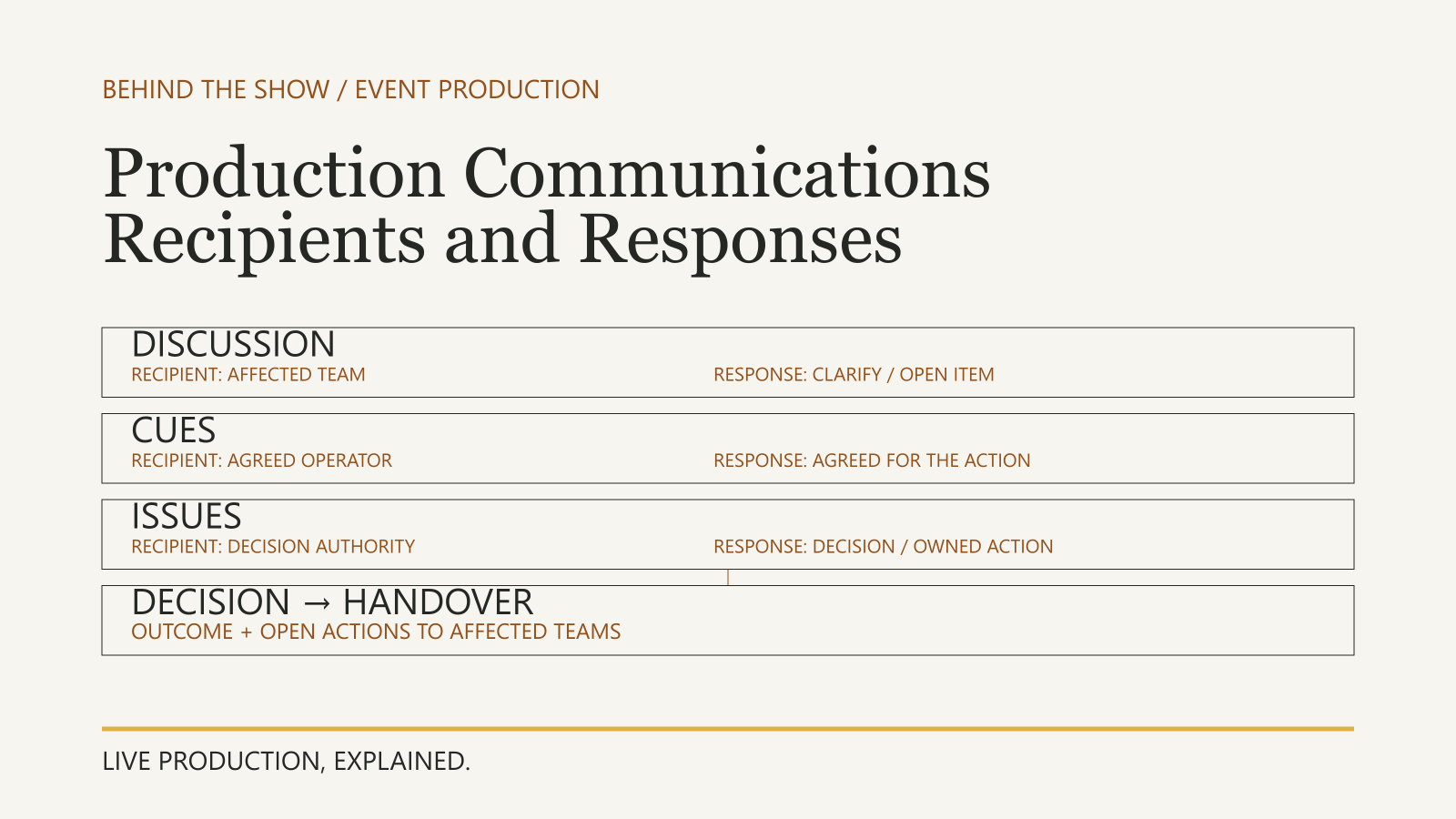
Ask which instruction takes priority if two requests conflict. A person in a different department can explain what they need. Your lead can tell you whether you should change your current assignment and who needs to know. Read Production Communications for how a team distinguishes working questions from cue instructions and decisions that need escalation.
Worked example: six packs, two destinations
A first-time production assistant is booked for a conference setup. At the briefing, their lead asks them to deliver six labelled presenter packs to the main backstage desk by 09:10. The assistant takes four packs from the print table and checks the list. The last two are still being printed.
At 09:02 a breakout-room coordinator asks the assistant to take the four finished packs to the other room first. The assistant checks the labels and sees they name presenters in the main room. They report both the new request and the missing packs to their lead, including the current location of all the materials.
The lead confirms that the original four belong at the main desk and assigns a separate person to check what the breakout room needs. The assistant brings the four packs to the main desk. The person receiving them confirms the four presenter names and knows to expect the remaining two.
At 09:08 the assistant has to leave the print area for a scheduled briefing. The lead assigns a replacement, who confirms they will collect the two outstanding packs and tell the main desk when they arrive. The assistant hands over the two names, the print table location and the 09:10 target. The lead keeps the delivery open until the replacement confirms the final two have been received.
“Four received at the main desk, two still at print, replacement collecting” tells the next person what to do. “Packs delivered” would hide two unfinished items and leave the desk guessing.
ILLUSTRATIVE SCENARIO
Practise a handover before your first call
Use this pattern with a harmless example such as paperwork or labels. Say what was assigned, what the recipient has confirmed, what remains and who has accepted the next action. If nobody has accepted the handoff, report that to your lead so the work stays visible.
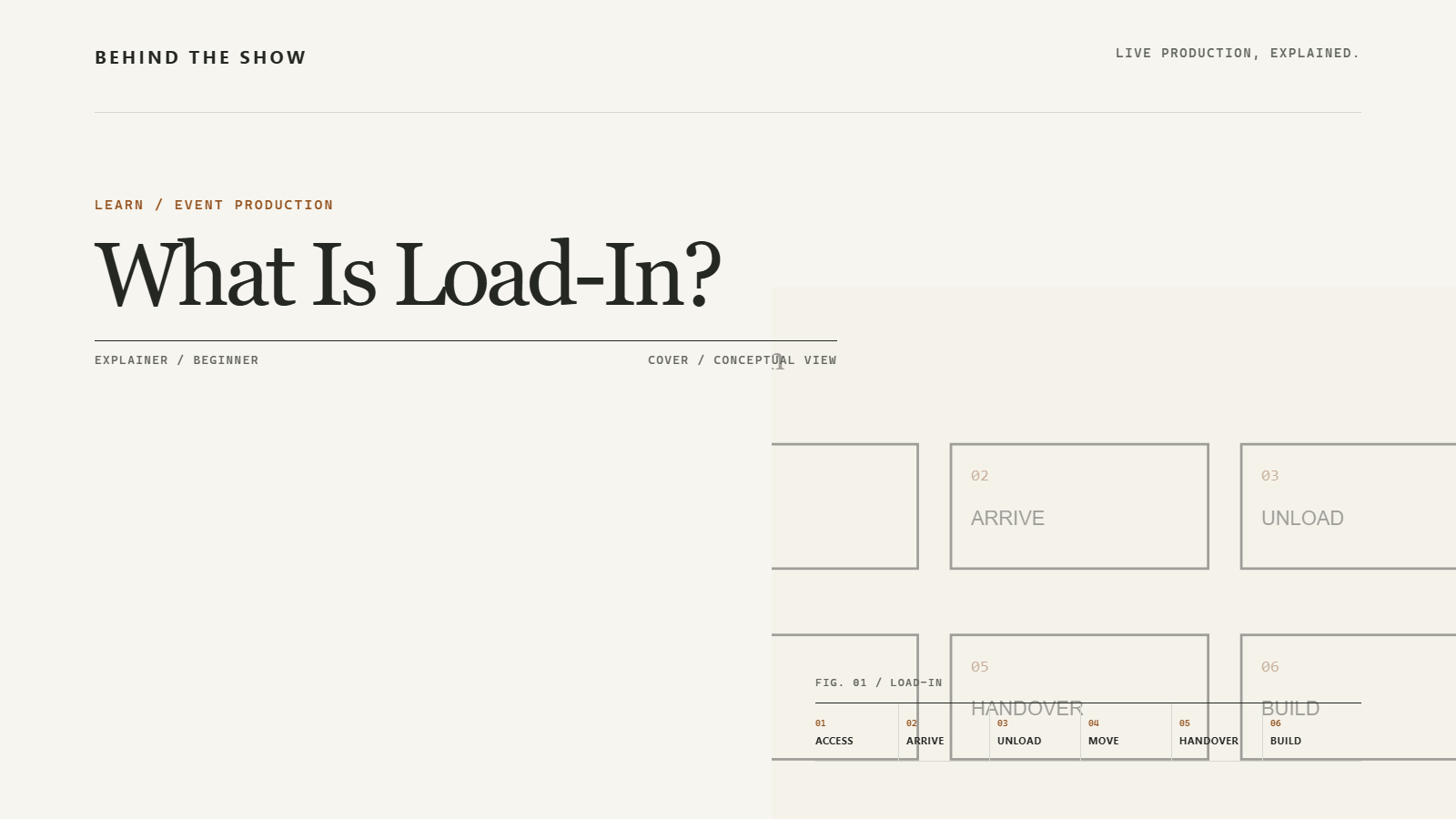
After the shift, write down one instruction you could have confirmed earlier and one report that helped the next person. Keep your notes free of private client details. For the planner's perspective, see Crew Calls and Department Handoffs. For where the call fits into the event day, read What Is Load-In? and What Is a Production Schedule?.
Related questions
What should I confirm before my first live event crew shift?
Confirm the call time, check-in point, supervisor, assignment, induction and what to bring. Ask who will confirm when you can leave.
What should I do if two people give me different instructions onsite?
Tell the person directing your work what has changed and ask them to confirm priority. Report any effect on the current assignment to the people waiting for it.
What should a production shift handover include?
Transfer the current arrangement, changes, checked results, limitations and owned open actions. Confirm who takes over the operating function and how coverage and follow-up are maintained; receiving a document alone is not acceptance of the role.
What if I am asked to do a task outside my assignment?
Check with your lead before taking it on. Ask who is assigned and what instruction, training or authorisation the task needs.
Sources & references
- Managing an eventUK Health and Safety Executive / primary document
Continue learning