9 min read
EXPLAINER / Production Management
What Does an Event Manager Do?
An Event Manager coordinates the wider work required to turn an event objective into a delivered event. Depending on the event and organisation, that may include the audience, programme, venue, budget, suppliers, registration, hospitality, communications, production, show-day operation and closeout. The exact scope and authority vary, so the role should be agreed rather than inferred from the title.
On this page
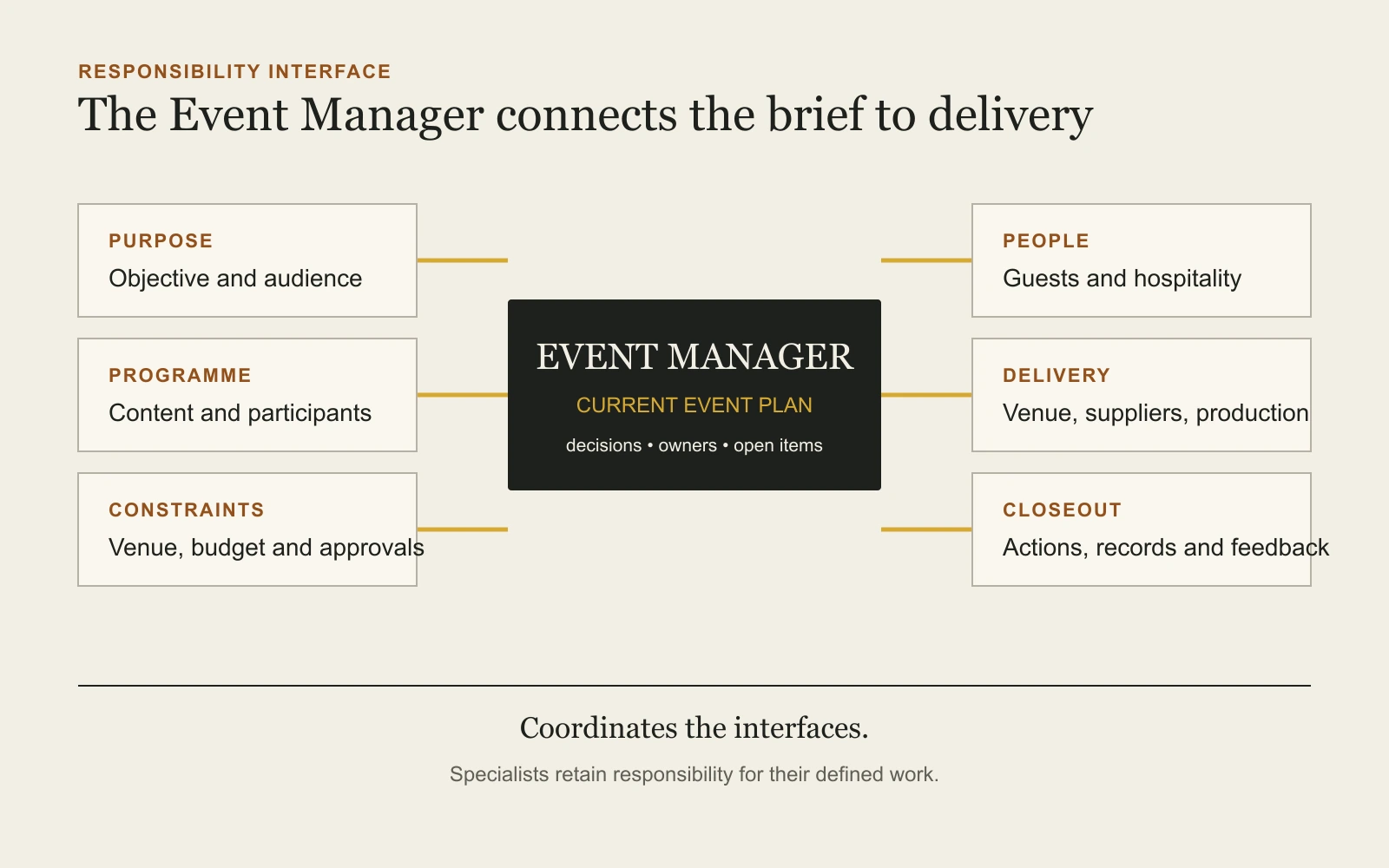
How an Event Manager connects the event objective, audience, programme, venue, suppliers, production and closeout.
In Brief
An Event Manager keeps the event's purpose, audience and delivery connected. The role may begin with an objective or brief, continue through venue and supplier planning, and remain active until open actions, payments, records and feedback have been addressed after the event.
The title does not describe one universal job. A corporate conference, festival, exhibition, awards show and private event can divide the work differently. On a smaller event, one person may combine event, production and onsite coordination. On a larger event, these functions may sit with separate teams.
Start With What the Event Must Achieve
Before booking services, the Event Manager needs to understand why the event exists and what a successful result would mean.
That may include:
- the event objective;
- the intended audience;
- attendance and participation assumptions;
- programme format and important moments;
- location, date and operating hours;
- accessibility and inclusion requirements;
- budget and approval limits;
- stakeholder expectations;
- legal, venue or organisational constraints;
- the records or outcomes required after the event.
A list of requested items is not a complete event brief if the purpose, priorities and decision authority remain unclear.
Turn the Objective Into an Event Plan
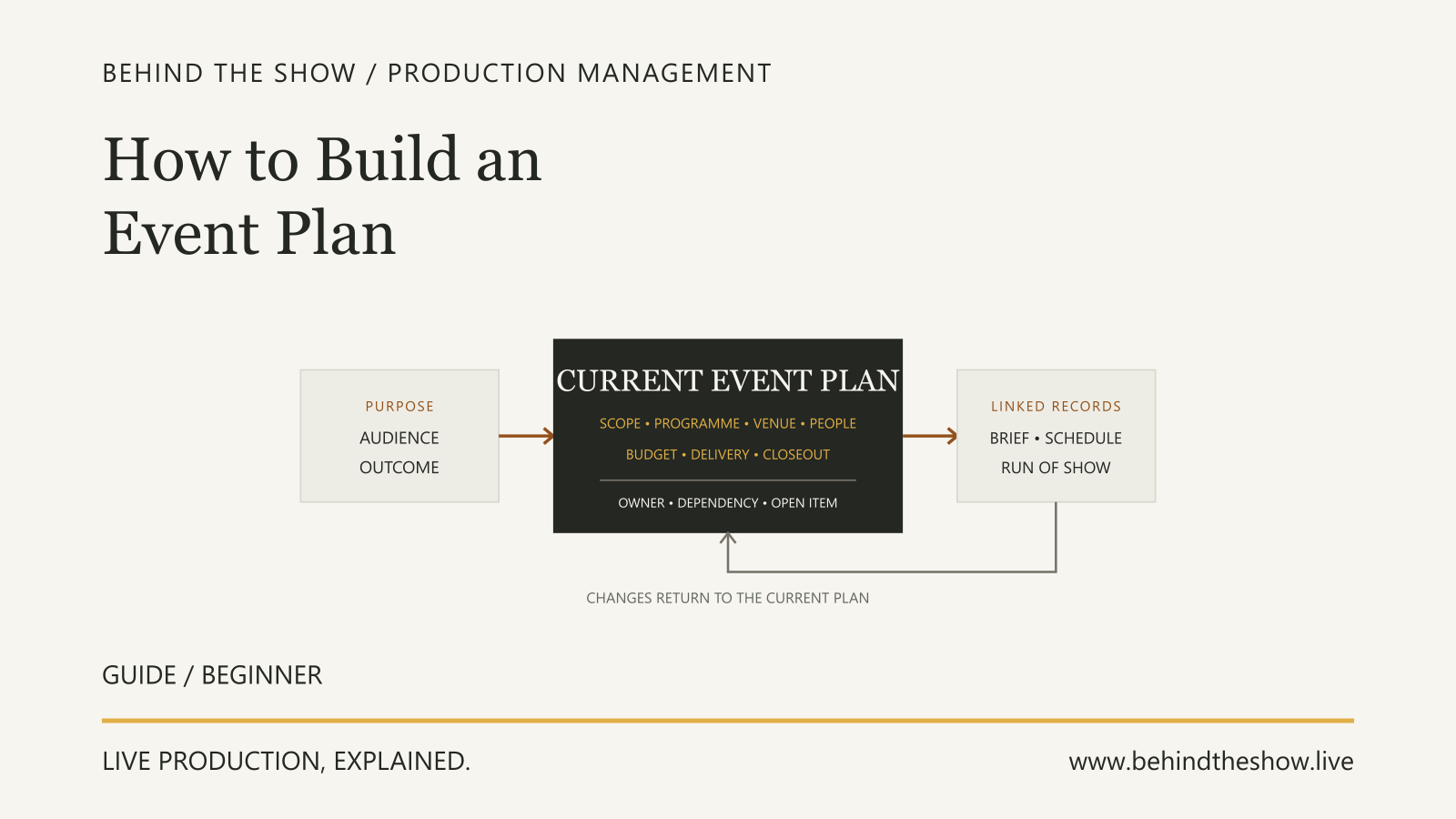
The Event Manager converts the event requirement into coordinated work. The plan may cover programme development, venue arrangements, suppliers, participants, guests, registration, hospitality, travel, communications, production, staffing, schedules, permits, insurance, accessibility and closeout.
Not every Event Manager personally performs every task. The useful function is to make ownership, timing, dependencies, approvals and unresolved questions visible.
Coordinate the Venue and Suppliers
The Event Manager may obtain and compare proposals, coordinate contracts, review venue information and maintain communication with suppliers. A comparison should examine commitments, exclusions, assumptions and responsibilities, not only totals.
The Event Manager can coordinate what the event requires, but each supplier remains responsible for accurate information and competent delivery within its agreed scope. Venue approval does not replace a specialist approval, and a supplier reporting completion does not automatically prove that every connected result is ready.
Keep the Programme Connected to Delivery
Programme decisions affect more than the agenda document. Adding a speaker can affect registration, travel, backstage space, content, microphones, stage positions, interpretation, recording, timing and audience communication.
The Event Manager should route a change to the people whose work it affects, identify available options and obtain the required decision. A revised programme is not yet an agreed operating plan until the affected teams have reviewed what must change.
Manage the Audience and Participant Experience
Depending on scope, the Event Manager may coordinate registration, arrivals, wayfinding, seating, hospitality, accessibility, attendee communication, speakers, artists or other participants.
This does not mean controlling every audience outcome directly. It means connecting the intended experience to the venue, programme, staff and suppliers that help deliver it.
Work With the Production Team
Live production turns programme and experience requirements into workable technical and operational arrangements. The Event Manager may brief production, confirm priorities, coordinate stakeholder decisions and accept changes within the authority granted by the organiser.
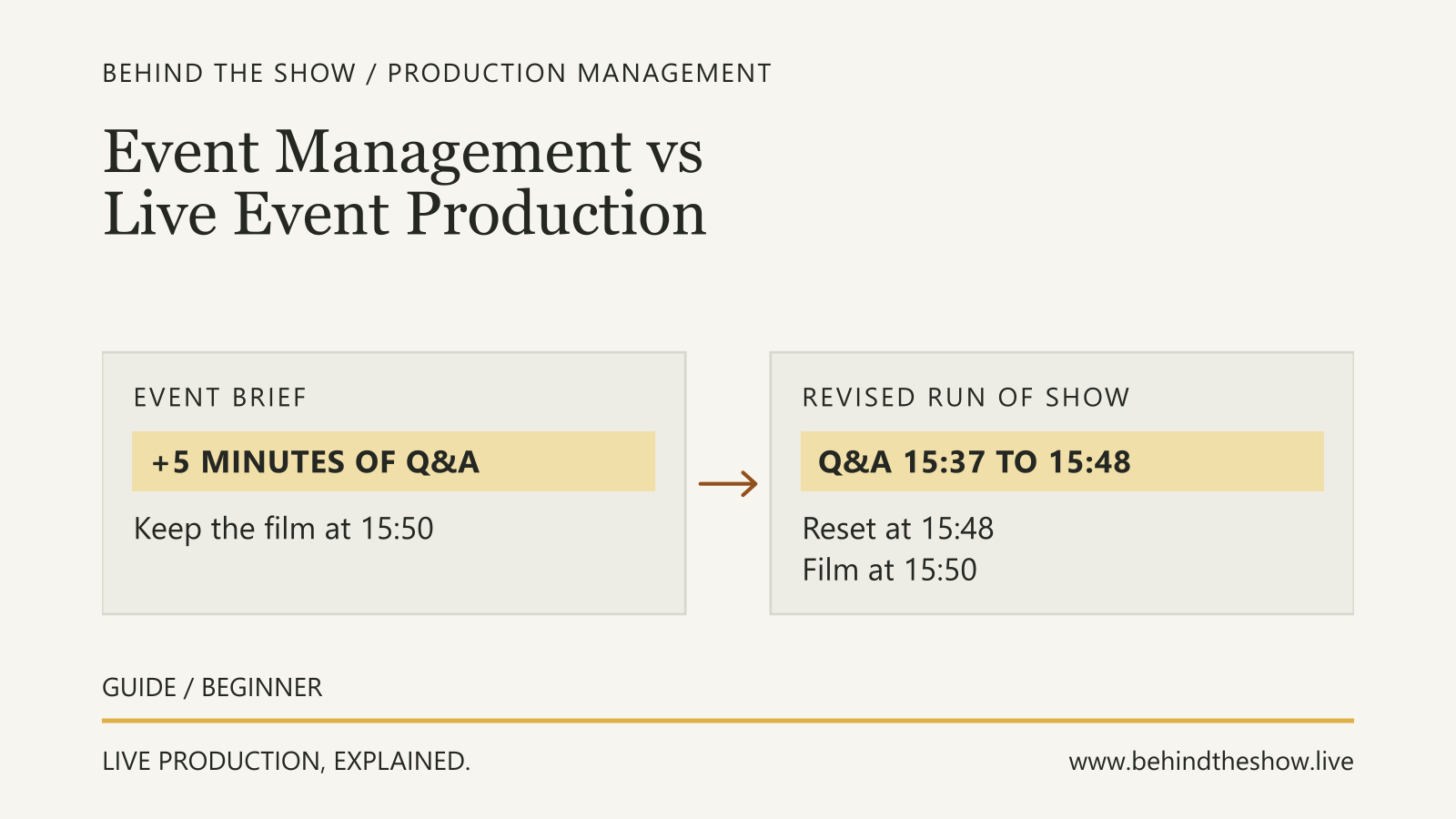
The Production Manager commonly coordinates the production requirements, suppliers, departments, schedules and technical interfaces needed to make the show workable. The Technical Director focuses on technical integration and proposed technical resolutions. Stage Management coordinates defined backstage and stage activity. Show Calling controls the agreed sequence of cues during the show.
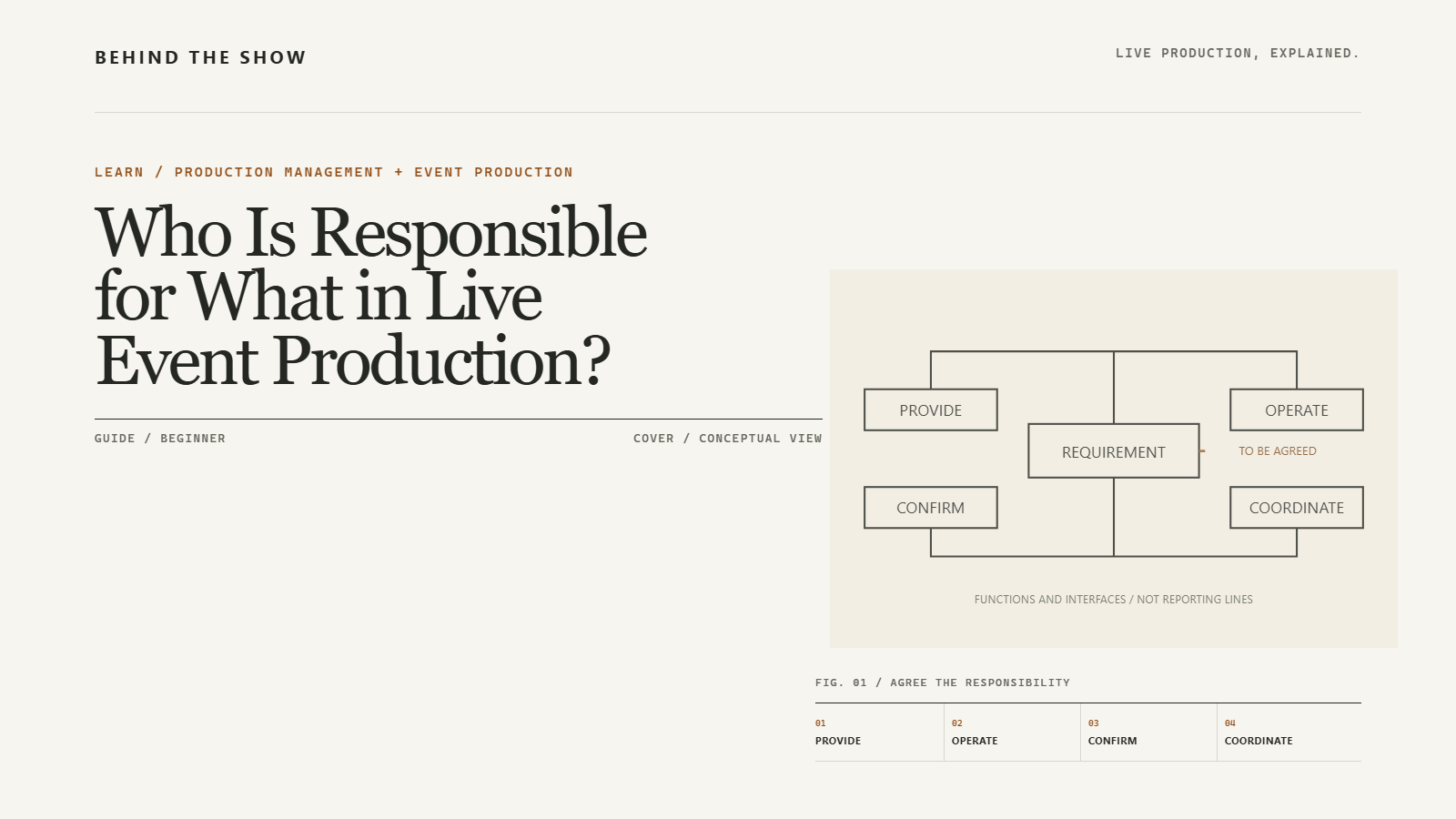
These boundaries vary. The people involved should agree who supplies information, who checks it, who proposes a response and who can accept the result.
Track the Budget and Commitments
The Event Manager may develop or monitor a budget, obtain approvals, track contracted commitments and review invoices. The level of financial authority varies by organisation.
A budget line should remain connected to its scope. A cost saving that removes crew, rehearsal, access time or a recovery arrangement may change the event result. The Event Manager should make that consequence visible before the change is approved.
Prepare for the Event Day
Before the event opens, the Event Manager needs a current view of what is complete, what remains open and who can accept the remaining conditions.
Useful records may include:
- the current programme or run of show;
- the production and venue schedules;
- supplier contacts and escalation routes;
- participant and presenter information;
- registration and guest arrangements;
- agreed responsibilities and approval limits;
- open actions and next updates;
- backup or recovery decisions;
- evidence required for readiness.
The Event Manager does not create technical evidence by declaring that a system is ready. The responsible people report and check their scopes. The authorised event decision-maker then decides whether the event can proceed within the conditions that remain.
What Does the Event Manager Do During the Event?
During the event, the role may involve monitoring the wider programme, audience and stakeholder experience; coordinating venue and supplier issues; keeping decision-makers informed; and routing approved changes through the agreed operating structure.
The Event Manager should avoid becoming an unnecessary parallel cue channel. Immediate show cues should continue through the agreed show-calling and communications structure. If the programme needs to change, the Event Manager or authorised owner makes or obtains the programme decision, then the agreed caller communicates the resulting instruction to the operating teams.
Close the Event Properly
The Event Manager's work may continue after the audience leaves. Closeout can include venue handover, supplier records, equipment or damage reports, invoices, unresolved actions, attendee feedback and a review of what should change next time.
Physical load-out, venue clearance, financial closure and resolution of outstanding actions are different states. They should not be collapsed into one vague statement that the event is finished.
Event Manager vs Production Manager
An Event Manager commonly holds the wider event brief. That may include purpose, audience, programme, venue, budget, participants, suppliers, hospitality and communications.
A Production Manager commonly focuses on making the live production workable across technical requirements, suppliers, departments, people, schedule, logistics and venue interfaces.
The roles can overlap or be combined. The distinction should be based on agreed responsibilities, not the title printed on a credential.
Event Manager vs Stage Manager
The Event Manager coordinates the wider event. The Stage Manager coordinates defined backstage and stage activity, such as performer or presenter readiness, entrances, exits, stage transitions and communication with the caller.
The Event Manager may approve a programme change. Stage Management then determines what that approved change requires within its operating scope and reports whether the affected movement is ready.
Event Manager vs Technical Director
The Event Manager states the event requirement and coordinates the decision route. The Technical Director reviews how technical systems and departments work together, identifies interface problems and develops proposed technical resolutions.
An Event Manager can accept a programme, budget or experience trade-off if authorised to do so. That does not make the Event Manager the person who certifies specialist technical or safety-critical work.
Worked Example: A Keynote Becomes a Panel
A business conference is planned around one 30-minute keynote. Two days before the event, the organiser replaces it with a moderator and four-person panel. The session time and published doors time remain unchanged.
First Review
The Event Manager records what the organiser has approved and asks the affected teams to review the change.
| Area | Existing plan | New question | Responsible response |
|---|---|---|---|
| Programme | One keynote for 30 minutes | Does the panel include introductions, discussion and audience questions? | Programme owner confirms the intended format and priorities. |
| Participants | One presenter | Are all five people confirmed, briefed and available for rehearsal? | Speaker team confirms people, contacts, access needs and arrival times. |
| Stage | Lectern presentation | What seating, entrances, exits and reset time are required? | Stage Management and production review the operating arrangement. |
| Sound | One lectern microphone | Which microphone arrangement supports the panel and audience questions? | Audio proposes and checks the system within its scope. |
| Content | One presentation deck | Are opening titles, names, questions or supporting content required? | Content owner confirms current files and approval authority. |
| Audience | Listening session | Will questions be taken, and how will they reach the panel? | Event team confirms the audience process; production reviews its operating effect. |
| Schedule | Keynote rehearsal slot | Can the panel and affected teams rehearse the changed sequence? | Event Manager coordinates availability; departments confirm what they can check. |
The first review shows that changing the agenda title is not enough. The Event Manager keeps the change open while the responsible teams develop workable responses.
Agreed Decision
The organiser approves a moderated discussion without audience questions. Four chairs and one moderator position replace the lectern. Audio proposes five radio microphones plus an agreed backup arrangement. Stage Management confirms one entrance, one exit and the seating order. The content team prepares approved names and a holding slide. A 20-minute panel rehearsal replaces the keynote check.
The Event Manager updates the current event plan, programme contacts and participant instructions. Production updates the relevant stage, audio, content and schedule records. Each team checks its own result. The authorised organiser accepts the revised programme; technical and venue specialists retain authority for their scopes.
Late Change
On event morning, one panelist withdraws. The four-person arrangement is not treated as automatically valid for three panelists. Stage positions, names, microphone allocation and introductions are updated. The affected teams confirm the revised result before the session is called ready.
ILLUSTRATIVE SCENARIO
What Makes an Event Manager Effective?
Useful event management is not demonstrated by personally controlling every task. It is demonstrated by keeping the event objective, current information, responsibilities, decisions and consequences connected.
The Event Manager should be able to show:
- what the event is trying to achieve;
- which information is current;
- who owns each commitment;
- what has been checked;
- what remains unresolved;
- who can accept a change or remaining condition;
- what must be handed over or closed later.
Related questions
What does an event manager do?
An Event Manager coordinates the wider work needed to turn an event objective into a delivered event. Depending on the event, that may include the programme, venue, budget, suppliers, participants, registration, hospitality, communications, production, show-day operation and closeout.
When should an event manager get involved?
An Event Manager is most useful while the objective, audience, programme, venue, budget and delivery approach are still being defined. Later involvement is possible, but decisions already made may limit the available options.
Is a production manager the same as an event manager?
Not necessarily. An Event Manager often has a wider event-delivery role, while a Production Manager commonly focuses on the technical and operational production. Titles and responsibilities vary, and the roles may overlap.
Does an event manager control every supplier?
No. The Event Manager may coordinate supplier commitments and decision routes, but each supplier remains responsible for competent delivery within its agreed scope. Contracts and the recorded responsibility structure determine authority.
What information does an event manager need before an event?
The Event Manager needs current information about the objective, audience, programme, venue, budget, suppliers, participants, schedule, responsibilities, approvals, open actions and the evidence required for readiness. The exact information depends on the event.
What does an event manager do on event day?
The role may include monitoring the wider programme and audience experience, coordinating venue and supplier issues, keeping decision-makers informed and routing approved changes through the agreed operating structure.
Can an event manager approve technical work?
Only within authority actually granted and competence appropriate to that decision. Coordinating a requirement does not make the Event Manager the specialist who designs, checks or certifies technical, structural, electrical or safety-critical work.
What happens after an event finishes?
Event closeout may include venue handover, supplier records, invoices, equipment or damage reports, unresolved actions, feedback and a review of improvements. Load-out, venue clearance, financial closure and action closure are separate states.
Sources & references
- Meeting, Convention, and Event PlannersU.S. Bureau of Labor Statistics / primary document
- 13-1121.00 - Meeting, Convention, and Event PlannersO*NET OnLine / primary document
Continue learning