4 min read
GUIDE / Production Management
Event Management vs Live Event Production
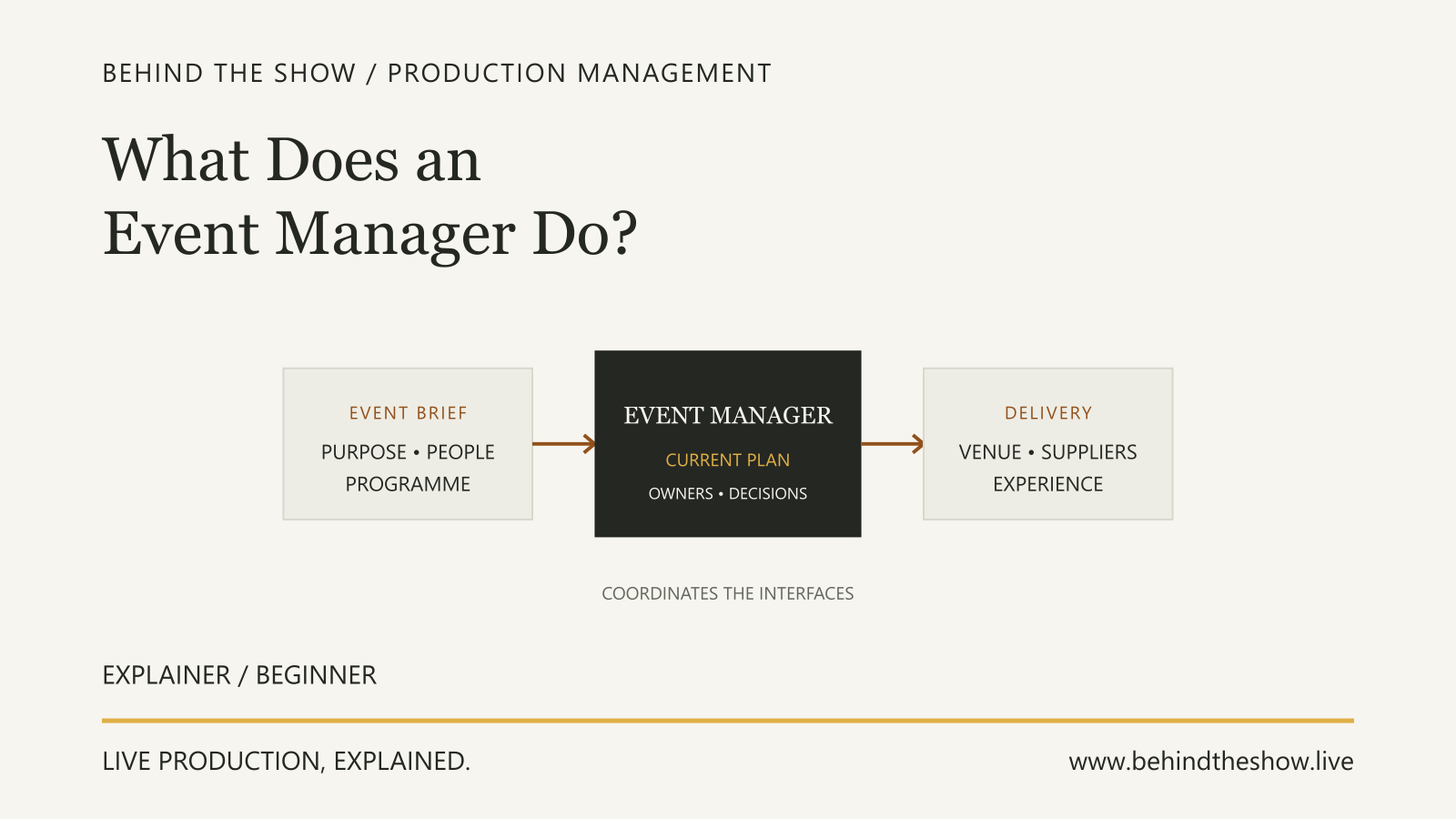
Event management coordinates the wider event, including its objectives, programme, attendees, venue and budget. Live event production turns the programme into a workable plan for what happens in the room and at any other agreed audience destination. The two overlap when a decision about the event changes what the crew has to deliver. Agree who owns the requirement, who checks feasibility and who can approve a change. A small team may assign several of those jobs to the same person.
On this page
A five-minute programme change shows where the organiser's decisions and the production team's checks meet.
Follow one requirement across the two teams
The organiser of a conference wants the audience to ask questions after a panel. The event team can explain how much time the programme allows, who can participate and what the moderator should promise. The production team can work out how people will be heard, who will move the microphones and how the moderator will know when to take the final question.
Those decisions affect each other. A single microphone can suit a short queue beside the stage. Taking questions from seats on both sides of the room changes how staff move, how long a question takes and how much of the segment the moderator can use. The useful handoff describes the audience outcome and the conditions around it. The production team can then propose an arrangement and explain the trade-off.
Separate the jobs before assigning names
| Job | What it gives the other team |
|---|---|
| Set the requirement | The intended audience experience, programme time, budget or other constraint. |
| Check feasibility | An arrangement the team can deliver, plus any dependencies or open questions. |
| Accept a trade-off | A decision to change the programme, budget or agreed scope, made by the person authorised for that decision. |
| Put the decision into use | The updated instructions, the people who need them and the checks needed before use. |
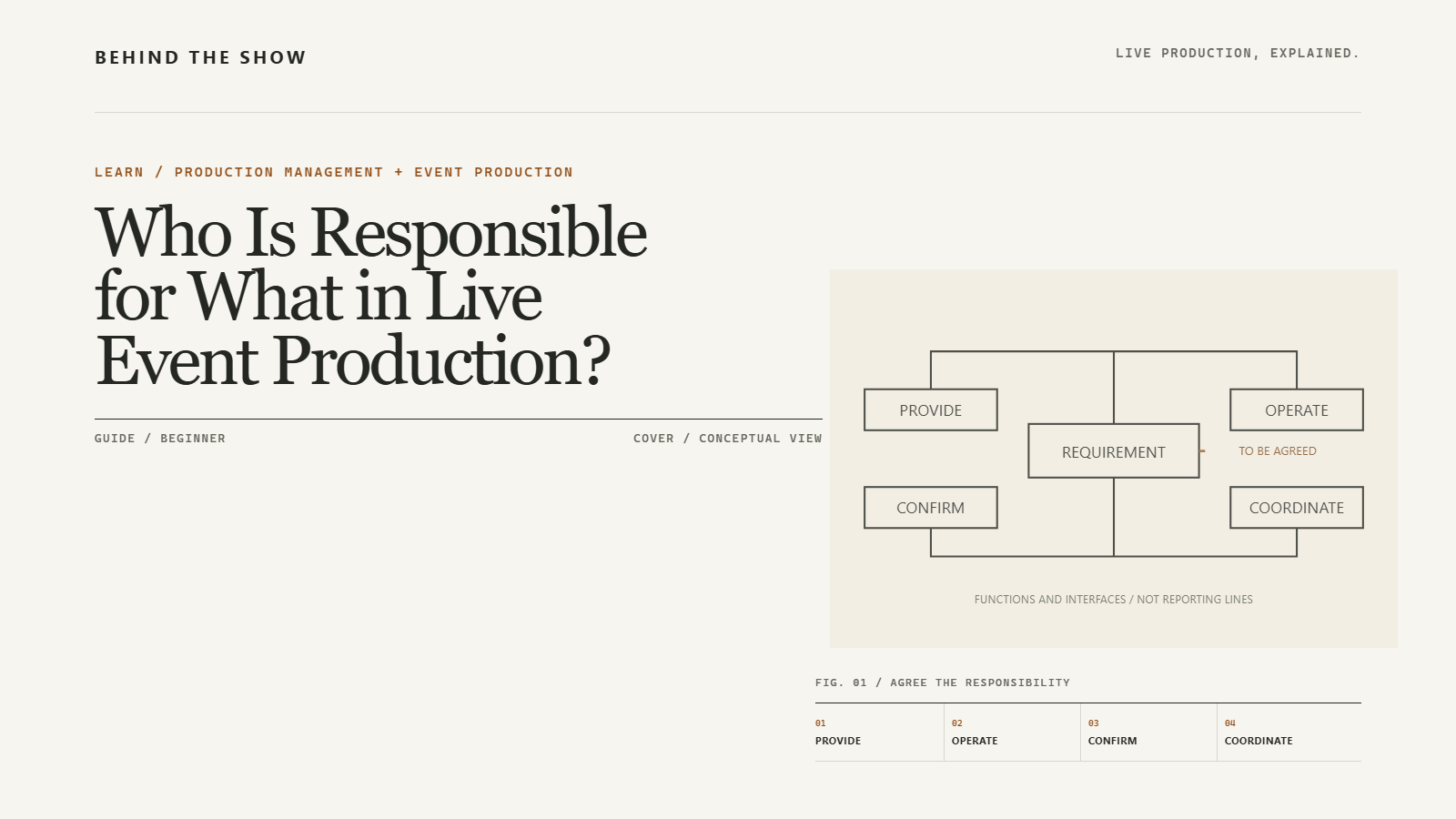
At one event the organiser approves a programme change and the production manager coordinates the revised delivery. At another, the same person handles both. Agree the jobs and the limits of each person's authority before a decision is needed. For a wider map, see who is responsible for what.
Worked example: a longer audience Q&A
A conference panel is followed by a sponsor film at 15:50. On the day, the event lead asks for five more minutes of audience questions. The current run of show puts questions at 15:42 to 15:48 and leaves two minutes to reset for the film. The event lead can change the panel format. The sponsor film time is fixed by the brief for this example.
The production manager checks the request with the moderator, stage team and caller. The extra five minutes would take the reset past the film start. Shortening the reset is proposed, but the stage team needs its two minutes to clear the panellists and microphone runners from the agreed exit before the film begins. A second option is to shorten the moderator's closing discussion, which takes place before the audience Q&A, by five minutes. The moderator confirms that this works if the final planned question is removed.
The event lead approves the second option. Questions now run from 15:37 to 15:48, leaving the reset and film at their original times. The stage team confirms the same movement and reset remain workable. The moderator receives the revised segment and the signal for the final audience question. Before the segment, the caller confirms which run-of-show revision the affected team is using. The caller waits for the stage team to confirm the reset is complete before cueing the film.
The five minutes come from an approved programme choice. The reset stays in the plan because the team still needs it. The production manager's useful contribution is to show where the requested time could come from and what each choice would affect.
ILLUSTRATIVE SCENARIO
Write a handoff that gives people something to act on
Capture the requested outcome, the constraint that must hold and the person who can approve a change. After the feasibility check, add the agreed arrangement, who needs it and any checks still due. If a decision remains open, record when it is needed and what plan is currently in use.
Use the production brief for the requirement, production advance to resolve dependencies and the run of show for the live programme sequence. Use the guide to production change impact when a proposed decision affects several departments, documents or commitments.
Related questions
What is the difference between event management and live event production?
Event management coordinates the wider event. Production turns the programme into a workable live delivery plan. They overlap when an event decision changes what the team must deliver.
Can one person handle event management and production?
Yes, depending on the event and the person's scope. Make the different jobs and approval limits explicit, even when one person holds them.
Who approves changes to a live production?
Approval depends on the decision and agreed authority. Identify the relevant client, artist, venue or specialist approver and communicate the result to affected teams.
What should be included in an event production brief?
Include what is happening, where and when it happens, who is involved, what the audience and performers need, the schedule and access, known venue information, supplier responsibilities and any information still to be confirmed.
Continue learning