5 min read
EXPLAINER / Live Sound
What Are Delay Speakers in Live Sound?
Delay speakers are additional audience loudspeakers used to support coverage in areas farther from the main sound system. Their audio feed is delayed so their sound can be coordinated with sound arriving from the main loudspeakers. They may be used in large rooms or outdoor audience areas, sometimes on delay towers. Their placement, aiming, level and timing need to be designed and checked as part of the complete system.
On this page
Start with the listening area, then review how the loudspeakers work together.
Why are there speakers halfway through the audience?
The stage loudspeakers are not always the only audience sound source. An event may also need loudspeakers serving a more distant section of the listening area.
These are often called delay speakers or delayed loudspeakers. At an outdoor event they may be supported on structures known as delay towers. The tower is the support arrangement; the audio function is the additional audience coverage.
QSC's explanation of delayed loudspeakers describes their use in large rooms and outdoors. It also makes clear that they need to work with the main stage system. Adding another loudspeaker is only part of that task.
For the wider audience system, begin with What Is a PA System?.
Why the feed is delayed
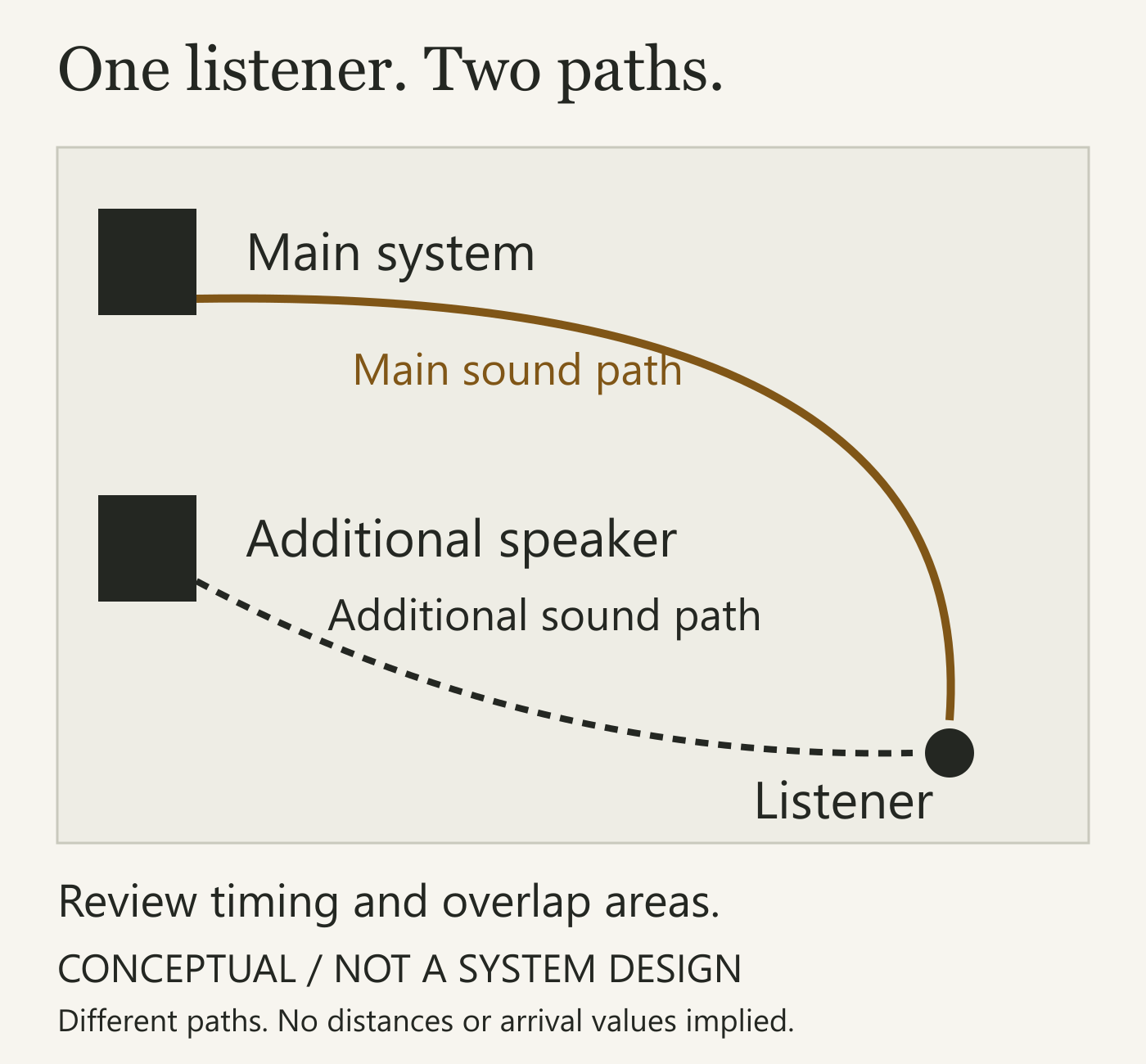
Sound takes time to travel through the air. A listener near an additional loudspeaker can receive that loudspeaker's sound before the sound travelling from the main system.
Electronic delay holds back the additional feed. The audio team considers how the arrivals combine in the listening areas where the systems overlap. Poorly coordinated arrivals can affect clarity or produce an audible echo; the outcome depends on the arrangement. QSC's timing guidance explains this principle.
More loudspeakers do not, by themselves, establish better coverage.
This is different from adding an echo effect to a voice or instrument. Here, delay serves the relationship between audience loudspeakers.
Coverage is a requirement to describe
Before choosing towers or additional speakers, identify the listening area. Which sections of the audience need the programme? Will people remain in one place or move between areas? Are there structures or restrictions that affect the proposed positions?
Give the responsible audio team the current audience layout, programme, main-system information, possible equipment locations and known venue constraints. A new audience area is a requirement change, even when the stage and performance stay the same.
The FOH function concerns the audience mix. System design and alignment may be handled by the same person or by another specialist. Agree who designs, checks and operates the relevant parts.
Worked example: the audience area grows
A fictional outdoor event originally has one audience area. The organiser later opens a rear area to accommodate more people. The revised area was not included in the audio supplier's earlier coverage review.
The organiser asks whether the main system can simply be turned up. The production lead instead gives the audio lead the revised audience plan and asks for a reviewed arrangement for the full area.
The proposal is not yet a checked result
For this fictional event, the audio lead proposes additional delayed loudspeakers serving the rear area. The proposal identifies the intended listening area, feasible positions, connections and operating responsibility. The venue and production team must separately resolve the permitted support positions, access and cable routes through the relevant responsible people.
No tower position is approved merely because it appears on the audio drawing. Structural, electrical and access acceptance remain with the appropriate specialists and venue authorities under the event's arrangements.
Check the transition as well as the rear area
After the agreed system is prepared, the audio team checks it with suitable programme material and its system-verification methods. The agreed review includes the original audience area, the transition into the new area and the rear listening positions. Checking only beside the added loudspeaker would miss the question of how the systems work together elsewhere.
In the first review, speech is clear at a rear position but less distinct at a transition position. This observation is recorded without declaring a cause. The audio lead investigates the installed arrangement, makes an appropriate correction and repeats the affected checks. The production lead does not prescribe a delay value or treat a louder feed as the answer.
Keep the result specific
In the repeat review, the audio lead confirms the agreed checks for the current layout and records the configuration and any remaining limitations for operation. A proposed additional seating extension beyond the reviewed area is still unresolved. The organiser and production lead obtain a further audio review before treating that extension as covered.
This is an example of defining, reviewing and checking a changed requirement. It is not a prediction that additional speakers are necessary at every event, or permission to open an audience area.
ILLUSTRATIVE SCENARIO
Delay speakers, fills and monitors
These names describe different functions, but everyday labels can overlap. Additional audience loudspeakers may serve areas near the stage, farther away or in other parts of a venue. Clarify the area and function intended rather than selecting equipment from a label alone.
Stage monitors serve performer listening. A delay speaker in this Article serves an audience area. Their feeds and responsibilities should not be assumed to be interchangeable.
Signal Flow explains how audio reaches different destinations. A working main output does not establish that the delayed feed has been prepared and checked.
What should be agreed before the show?
The working information should identify the areas served, the current arrangement, responsible operators, completed checks and open conditions. It should also make clear who reviews a changed audience layout or equipment position.
Soundcheck considers the system with performers and programme. That wider process does not replace the audio team's system preparation, and an input-only check does not demonstrate audience coverage.
There is no universal tower spacing or delay value in this introduction. The useful beginner question is: which listening area is this speaker serving, and what evidence shows that it works with the rest of the system?
Related questions
What are delay speakers in live sound?
Additional audience loudspeakers with delayed feeds, used to support coverage and coordinate their sound with the main system.
Why are there speaker towers in the middle of a festival audience?
Some support additional audience loudspeakers serving more distant listening areas. The support structure and its acceptance are separate from the audio function. Not every tower has this role.
Why is the feed to a delay speaker delayed?
To coordinate its arrival with sound travelling from the main loudspeakers in the relevant listening areas. The actual setting depends on the system and layout.
Are delay speakers the same as stage monitors?
No. Delay speakers here serve the audience; stage monitors serve performer listening. Their requirements and feeds differ.
Does every event need delay speakers?
No. The responsible audio team reviews the audience area, programme, system and venue before proposing the appropriate coverage arrangement.
What should be reviewed if the audience area changes?
Review the new listening areas, current system arrangement, feasible positions, responsibilities and affected checks. An earlier result does not establish coverage for an unreviewed extension.
Sources & references
- How to Setup Delayed LoudspeakersQSC / manufacturer / 26 Oct 2020
- Loudspeaker placement part 7: Using delayed loudspeakersQSC / manufacturer
Continue learning